
‘A Tragedy Beyond Words’
Local vets, active military discuss Afghanistan’s return to Taliban rule
Local military veterans who served during the 20-year war in Afghanistan aren’t the only ones expressing frustration at how quickly the Taliban reclaimed control of the country in the wake of the U.S. troop withdrawal.
Area Vietnam veterans drawing comparisons with the 1975 fall of Saigon also voiced dismay at the Biden Administration’s similar failure to evacuate 10s of thousands of Afghan citizens and their families who aided the American cause.
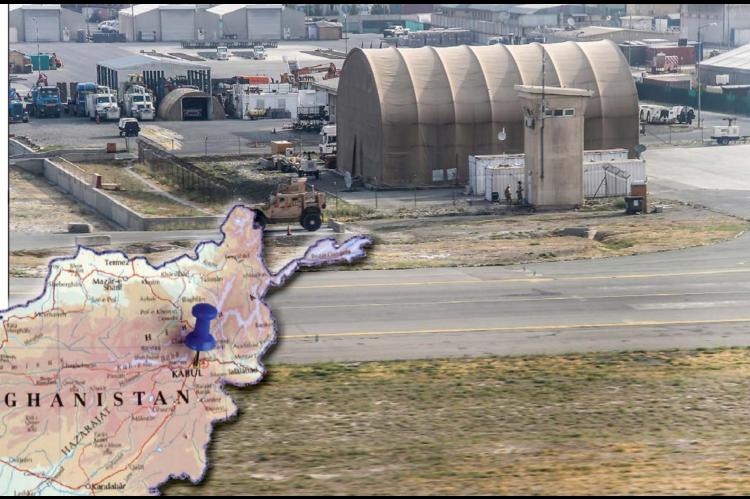
Evacuations continued Tuesday at Hamid Karzei International Airport in Kabul, the last remaining piece of real estate still under American control.
But with an estimated 20,000 Afghan nationals stuck in the bureaucratic pipeline for Special Immigrant Visas awarded to those who aided the American military, prospects are high that many will be left behind, along with their families, to suffer the wrath of the Taliban.
Also trapped are many Christian missionaries, Afghan civil rights advocates, journalists and an entire generation of young, educated professionals who grew up under the American flag of protection and the freedoms it provided.
Young women and girls especially – who are not allowed to be educated or hold jobs under the Taliban’s strict fundamentalist Muslim doctrine – face immediate subjugation, forced marriages to Taliban officers and worse.
A Kingfisher man who asked to remain anonymous because he is an active military officer, summarized the frustration, anger and distress expressed by many others who spoke to the Times & Free Press:
“The fall of Afghanistan is a tragedy beyond words for people who want to change their future from a fundamentalist state, for women’s rights, for education in the developing world, for our soldiers, state department and families who have poured out 20 years of blood, sweat and tears, for our national security and for our influence in the world and our ability to keep it stable.”
Flat-Out Wrong
The Biden Administration could not have been more wrong about its predictions for whether or how soon the Taliban would move in the vacuum created by the U.S. troop withdrawal first announced in April. Biden said as recently as
Biden said as recently as July 8:
“The likelihood there’s going to be the Taliban overrunning everything and owning the whole country is highly unlikely.”
Intelligence briefings in June pegged the timeframe within which the capital city of Kabul might be threatened by Taliban insurgents at at least a year and a half.
That estimate was adjusted to six to 12 months and then shortened again last week to 30-90 days.
Five days later, the Taliban seized control of Kabul.
“I don’t think anyone was shocked that Afghanistan fell back to the Taliban, but I don’t think anyone thought it would be in just a matter of a few days,” Kingfisher City Manager Dave Slezickey, who holds the rank of command sergeant major in the Oklahoma National Guard, said.
Frustration and Heartache
While current and former military personnel who spoke to the Times & Free Press disagreed on whether a full withdrawal should have happened, everyone agreed that the way it was handled was an unmitigated disaster.
The much criticized 3 a.m. withdrawal of troops from the largest U.S. base in Balgram in July without informing the Afghan military that the base was vacated was mentioned as an indicator of the mismanagement of the entire withdrawal plan.
“We dipped out of Balgram back in July overnight and left millions of dollars of military armored vehicles, guns and countless other stuff that the Taliban could get ahold of and use against anyone they want including us,” Aaron Anderson, a U.S. Navy veteran who served from 2006-15 wrote on the Times & Free Press Facebook page.
“The President is acting like it’s no big deal that we pull out leaving military equipment at bases instead of destroying, bringing back or moving to another base.
“He pretty much supplied the Taliban with American military weaponry.”
U.S. Marine veteran Jason Burch, who served from 1999-04, argued that the war was futile from its inception, making the end result predictable.
“To paraphrase a quote by Andrew Jackson that fits here, dealing with Afghanistan was like we had a wolf by the ear and we don’t want to kill it because we see the good and beauty inside it.
“We can’t hold on forever but at the same time we don’t dare let it go for fear that it’ll turn and bite us.
“Well, now is the biting time.”
Al Wright, who was stationed in Korea from 1968- 69, said the U.S. was never in it to win it in Afghanistan and that lack of will predicted an inevitable outcome.
“If we’re going to have to fight a war, declare war and fight it to win.
“Just like Vietnam and Korea, don’t go if you don’t want to win.”
Dr. A.J. Johnson, offered a different perspective, which he said comes more from his career as a teacher and student of history than from his two decades of noncombat military service:
“When we saw the Afghan military dissolve before our eyes, it was simply because most people there have no loyalty to an imaginary thing called Afghanistan.
“Their loyalty rests with their region and, more strongly, with their villages and families.
“To think most people would risk their lives for a nation of which they cannot conceive was naive at the least. “I doubt a hundred years
“I doubt a hundred years of U.S. occupation would have made any difference at all.”
All Gave Some, Some Gave All
The ignomious withdrawal and its disastrous aftermath is most regrettable to the current and former military members who saw the sacrifices made by soldiers on the ground, a greater loss than the trillions of dollars invested over the last 20 years.
“Everything we fought for, every man and woman that died was for nothing when we didn’t make a difference,” Anderson wrote.
“I did my time in Iraq, but had three separate subordinate units over there (in Afghanistan) on three different tours,” Slezickey said.
“So I have a lot of friends I’ve been chatting with. Kind of Monday morning armchair quarterbacking their feelings, but it’s been disheartening.”
“It seems the United States didn’t learn much from the war in Vietnam,” Dennis Sawyers, a two-tour veteran of that conflict, wrote on Facebook.
“It seems to be a repeat to me. Just a little over $2 trillion over there so far and 2,600 lives.
“Was it worth it?”
“The chaos at the end is ... not the fault of the individual service men and women who sacrificed so much when their nation called,” Johnson said.
“They must not be forgotten and must be supported.”
“Our service men and women did not lose this war anymore than we lost Vietnam,” retired associate district judge and Vietnam veteran Robert Davis said.
Saigon Revisited
As a young U.S. Senator, Biden was part of the congressional majority that discontinued support of the South Vietnamese army after America’s withdrawal from that country.
Two years later, the South Vietnamese capital of Saigon fell to North Vietnamese forces.
Images of U.S. Embassy staff being airlifted off the roof as thousands of South Vietnamese who were American allies swarmed the compound and were left behind are seared into the American consciousness.
In his June 8 press comments, Biden now famously promised no similar event in Afghanistan.
“There’s going to be no circumstance when you’re going to see people being lifted off the roof of an embassy,” Biden said. “It is not at all comparable.”
But in the months leading up to the withdrawal, the Biden Administration failed to develop a plan to safely remove its Afghanistan allies, despite almost constant pressure to do so by members of Congress from both sides of the aisles as well as from private advocacy groups.
As the Taliban began its relentless march across the country, about 20,000 special Visa applications were still wending their way through the years’ long bureaucratic process. And by Sunday, video
And by Sunday, video images of desperate Afghani citizens clinging and then falling from the sides of departing aircraft ensured Biden his own “Saigon moment.” For area residents who
For area residents who actually served in Vietnam, the comparison is especially poignant and heart-rending.
“I wore a black armband in 1975 when Saigon fell,” Davis said. “The U.S. Congress sadly abandoned the South Vietnamese people.
“The similarities are amazing in Afghanistan. The speed in which it’s happening is scary.
“The poor political planning and support for our true allies is a disgrace.”
“These lives and their blood is on the hands of our government,” Gene Massey, who served as a Marine Corps pilot in Vietnam, wrote.
“Sen. Biden was one of the guilty then and is guilty now, because we have betrayed Afghanistan.”
Note: Massey shared a lengthy and informative history of the Vietnam War on the Times & Free Press Facebook page that is a worthwhile read.
The local military officer who spoke with the Times & Free Press anonymously offered this:
“Between us, if I am being completely honest, I don’t know how to coherently process everything right now as my humanitarian sadness overshadows my ability to have a broader policy debate.”