
‘I missed the birth of my first child…12,000 miles from home’
Charles Storm may not have been on the front lines, but is one of millions of veterans who made sacrifices
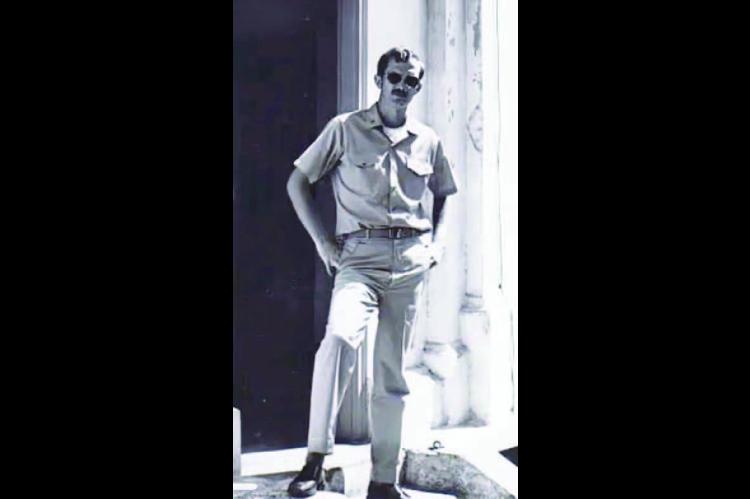
It was 1968.
Charles Storm, a Kingfi sher County farm boy and 1964 Dover High School graduate, was looking forward to earning an agricultural science degree at Oklahoma State University and stepping out into the prime of his life.
Uncle Sam had his own plans.
With the ongoing war in Vietnam, and Storm’s draft number just waiting to be called, he joined the U.S. Navy on April 8, 1968, but received a deferment allowing him to complete his education at OSU in January 1969.
A month later, Storm married his college sweetheart, Karen, and moved to Newport, R.I. in August where Karen took a job as a teacher. Charles reported for duty, on Feb. 8, 1970, receiving his commission as an ensign in the U.S. Navy on June 7, 1970.
His first assignment was serving as a communications watch officer for the Chief of Naval Operations at the Pentagon in Washington, D.C.
He served in that position for approximately a year, then in April 1971, Storm began an extensive Vietnamese language and cultural training program in Annandale, Va., in preparation to serve as a food supplement advisor to the Vietnamese Navy.
Upon completion of that training program, Storm was transferred to San Diego, Calif., where he completed several months of survival skills and weapons training.
In May 1972, Storm was deployed to Vietnam.
He spent nine months implementing humanitarian aid and agricultural assistance programs through the Navy’s Project Handclasp until a ceasefire was signed in February 1973.
The program was de- signed to improve the South Vietnamese people’s standard of living, as well as to assure them that the U.S. military was not there to take over, but to fight the threat of communism from North Vietnam and also deter them from joining the Viet Cong, Storm said.
American companies would donate higher grade quality agricultural products, such as baby chickens, American and European breeds of hogs, garden seed, fishing equipment and other supplies which were then imported for the Navy’s Project Handclasp program.
“We had a loan program where if they (the South Vietnamese people) wanted to start a project, we would charge about half the normal market value to ensure their genuine interest and help them get started with animals, seed, fencing, fishing supplies or other things,” Storm said.
When a call came in for help with a sick animal or another agriculture need, Storm said he and an Army vet he worked with would go to the airport and find a flight on whatever was on the manifest that day… often flying in helicopters with high-caliber guns draped out the window as soldiers flew patrol over roads in the area.
Other than their salaries, Storm said their office was essentially unfunded and they had to get creative in finding ways to get some of the supplies they needed.
“If we wanted something we had to go out and hustle it…maybe finding tin the Army hadn’t used to help the Vietnamese build a chicken house or wood from something being torn down to build a fence or shelter,” he said.
Other items were sometimes purchased on the market through the Vietnamese Repayment Fund which was funded through loans they offered to the Vietnamese people to start agricultural food supplement programs, he added.
Additionally, when ships would bring food supplies for the troops, Storm said, usually 5-10 percent would be condemned for human consumption due to spoilage and he and his counterparts would process the grains into hog and chicken feed, repackage them and sell them at a reduced cost to the people in the area.
Looking back on that time, Karen said, “I can see God’s work in that Charlie got to really know the people he worked with and helped that were involved in agriculture, oftentimes even having dinner with them.”
They would invite him into their homes and he would play with their kids, she said. Then at Christmastime he would send home specific requests for presents for each child, but they had to be something simple that the people could afford themselves, like crayons, coloring books, or underwear, she said, so that it wasn’t considered a cultural insult to them.
“Charile developed a great love for the Vietnamese,” she said. “I think it was a good American/ Vietnamese experience that they could know each other as friends.”
That was the purpose of the language and cultural training, Storm added, so you could relate to them more on a one-to-one basis rather than just as side-byside soldiers.
Other programs that were also run out of the same office included support for the many orphanages in South Vietnam and leaflet drops and nightly loud-speaker calls encouraging the Viet Cong to surrender, promising them a better standard of living, Storm said.
“My job was a good one,” Storm said. “I was never involved in combat and the scariest part for me was in the transportation… flying around to these little bases to check on the programs.
“You were doing this crazy job and sometimes you had to pinch yourself and remember that you were in a war zone.”
Though not on the front lines, Storm still faced daily risks to his life as well as the sacrifice involved in being away from home.
Not unlike scores of other soldiers who gave their service to the U.S. military, Storm’s job was one of many support roles which were essential to the success of the war effort.
“For every one guy that is out there on the front lines, historically there has been seven others behind him,” Storm said, “… covering everything from fuel, clothes, food, supplies of every kind under the rainbow as well as all this psychological warfare that goes on.”
Most of the Navy’s combat operations revolved around making sure the many canals in the area remained clear so the South Vietnamese could access them, keeping routes clear coming into Saigon and being able to get troops out, Storm added.
The Viet Cong were out there trying to intercept anything they could, he said.
They were 800 miles from Hanoi and they didn’t have those seven people behind them, so they were living off the land or stealing whatever they could, he added.
The Navy was very technically oriented as far as finding a job for you to support that ship, so you’re one of those seven keeping that boat afloat, whether you’re an engineer, navigation officer, electrician, weapons officer, cook or other position, Storm said.
“You can’t go out and fight a war on your own… you have to have that support team behind you,” he said.
Unfortunately, that support was not there for most veterans when they returned home, he added.
With the signing of a ceasefire in February 1973, Storm returned home from Vietnam a month later.
Completing his service as a Lieutenant JG (junior grade) rank, Storm received the Naval Commendation Award and a Meritorious Unit Citation with Gallantry cross from the Navy.
For his work in Southeast Asia, the People’s Republic of Vietnam also presented him with its National Technical Service Award and inducted him into its Tran Hung Dao Society (Tran Hung Dao was a 13th century Vietnamese Navy hero).
Upon completion of his military service, Storm returned to the Kingfisher area, where he and his wife raised three boys, Matt, Jay and Carl, on the same farm and in the same house where Storm grew up northwest of Kingfisher and still resides today.
The Storms have nine grandchildren.
Storm spent most of his life working on the farm, but also served two years as manager of the Kingfisher Chamber of Commerce and taught school for a year. He and Karen are very involved in the First Baptist Church and she spent almost 20 years teaching fifth and seventh grade reading and social studies in Kingfisher Public Schools.
Reflecting on his time in the service, Storm said, “It was four years of your life… you just sign a blank check and Uncle Sam sends you somewhere.
“I missed the birth of my first child…12,000 miles from home.”
That was a tough one, he said, but not as tough as coming home for “R and R” and then having to go back.
“After the baby was born in September, about two months later I got to go home for Thanksgiving.
“I went home and rocked the baby for two weeks and then went back…that was tough.”
Recollecting her own memories of those times, Karen expressed her thoughts about honoring those who’ve served on Veterans Day and the freedoms and liberties Americans enjoy today in the United States.
“We really need to appreciate what we have here because it can be lost if we don’t protect it…not only should we have an appreciation for the veterans, but just really loving all of it, because we have so much good here,” she said.
In agreement, Storm reflected on why it’s important to honor those who have and continue to put their lives on the line, some giving the ultimate sacrifice.
“Memorial Day is typically celebrated to honor those who were lost and Veterans Day celebrates all veterans,” he said.
“We should take the opportunity to stop and think about the sacrifices they’ve made.”