
Autry takes turn to recruit HPS to join its ranks
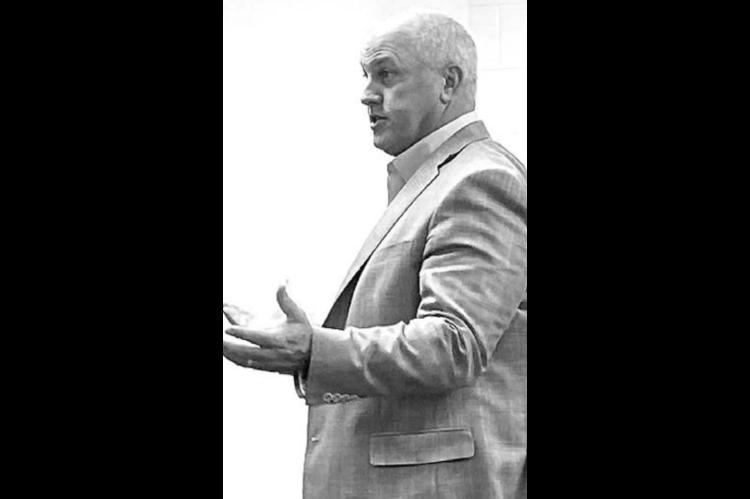
It was Autry Technology Center’s turn Monday to try to convince the Hennessey Board of Education that its services were best suited for the school district.
“High school students are our first priority” for seats in Autry Technology Center classes and “it’s not very often” that a student couldn’t get into a class, as long as they have good grades and attendance records.
That’s what Autry Superintendent Dwight Hughes told board members at their November regular meeting.
His comment was in reply to a question from board member Patrick Griffin about classroom availability if Hennessey decides to join the other 10 public schools that are currently members of the Enid tech center.
Those 10 members range in size from Class 6A to Class A schools, said Hughes who joined Autry July 1.
Before that, he was superintendent at the High Plains Technology Center in Woodward.
There are 750 fulltime adults and high school students at Autry and high school students make up about 50 percent (350) of the population, said Hughes.
Mandy Mayberry, Autry’s communications director, said 85 percent, or higher, of the total school population complete their course of study.
“How many high school students complete their courses?” asked Dr. James Matthew Ma tousek, board president.
Mayberry said she didn’t know, but would find out.
CTTC made proposal last month
The Hennessey board has discussed joining a technology center the past few months.
Chisholm Trail Technology Center personnel made their pitch to the board last month and wants Hennessey to continue to send students there.
This is the third and final year for CTTC’s agreement to accept Hennessey students for $1,000 per semester per student.
Public vote needed to OK tech membership
Hennessey school district voters will have to approve joining one of the tech centers. A super-majority (60 percent) “yes” vote would allow high school juniors and seniors to attend half day classes free.
Their books and supplies would also be free to them and to the school.
The membership cost would come from property owners’ tax assessments: 12 millages at CTTC and 15 millages at Autry.
Hughes said Autry’s funding is 70 percent local, 28 percent state and 2 percent federal.
In-district tuition rates for adults are half of what those would pay who live outside a tech district.
Pros and cons
Board members are weighing the pros and cons for each facility and have discussed town hall-type meetings to get input from voters on which center is best suited for the district.
Once that’s decided, they will need to call an election and if it passes, they would want it to go into effect in August 2022.
It would also be good for 2022-23 juniors and seniors to make an application for the classes they want.
One difference is that Autry offers more programs than CTTC and Enid is 20 miles (28 minutes) from HHS.
It’s 34 miles (37 minutes) to CTTC in Omega. Currently, Hennessey’s bus stops at the Dover school to pick up their students on the way to CTTC.
CTTC offers math and science classes and Hughes said Autry has “some” common ed classes.
Both tech centers offer training and working with local businesses and onthe-job training.
“We have some Hennessey businesses excited you’re looking at Autry,” said Hughes.
Satellite campuses
Autry has an OSSM (Oklahoma School of Science and Mathematics) satellite with two teachers in higher physics and math.
Also, 80 percent of those students get a perfect calculus score on their ACT, said Mayberry, who is in her ninth year at Autry.
There is safety training at the airport satellite “and we just got some flight simulators from Vance,” said Hughes.
“Jesse Ashlock (who was in the audience) is our liaison with Vance.”
Ashlock is also an industrial and mechanical technology instructor at Autry and has children in HPS.
Benefits to Hennessey businesses include access to safety and firefighter training, community development and business planning.
At the Meeting
All board members were present at Monday night’s meeting: Vice President Luke Lough, Cristopher Choate, David Tillman, Griffin and Matousek.
Also at the board table were Superintendent Jason Sternberger and Office Manager/Minutes Clerk Timberly Jech.
Other staff in the audience were principals Josh Faulkner (high), Ricardo Tarango (middle) and Stacey Mack (early childhood center); Todd Cameron, technology director, and Rae Fuksa, sixth grade math and technology assistant.