
Bonham defying the odds
Told he’d need a heart transplant, longtime proponent for organ donors has doctors scratching their heads as daily walks vastly improves his health
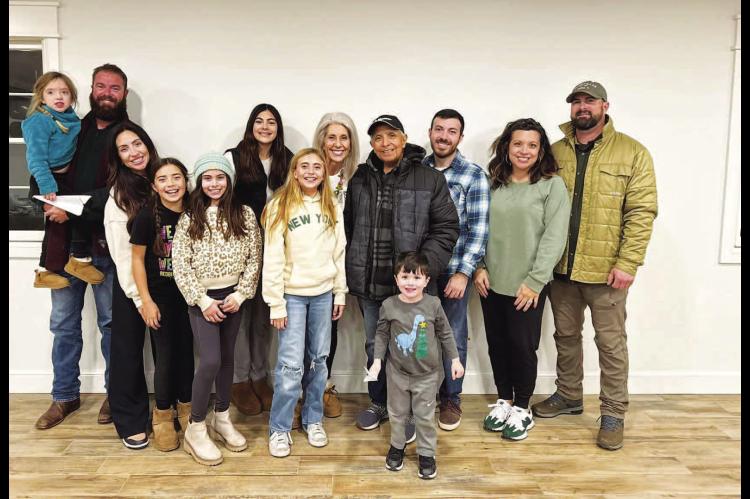
Making a difference in people’s lives has always been important to Virgil Bonham.
He just didn’t know the impact it would potentially have on his own life.
In 2010, Virgil and his wife, Rhonda, decided to take advantage of a good deal on an advanced body scan.
Rhonda’s came back clear.
Virgil’s did not. Masses were discovered around his heart and an echocardiogram later showed that Virgil’s heart was only pumping at 35 percent (55-70 percent is considered normal).
He was diagnosed with heart failure and placed on medication.
For the next 12 years, he led an active life with virtually no symptoms.
Working for the Department of Public Safety (now Service Oklahoma) for 38 years, Virgil also traveled the country playing bluegrass, country and gospel music, often with his children and other family members and just enjoying life.
Virgil and Rhonda, have two daughters, Shilah Jerkins (Eric) and Britney Fleming (Tyler), son, Hunter, and six grandchildren.
After years of virtually no symptoms, something began to change toward the end of 2022.
After a music show, Virgil said he loaded up his gear and realized he was almost completely out of breath, which was very unusual.
But with a little rest, he was off again.
Then, at the beginning of 2023 Virgil experienced two more episodes at work where he could not get his breath and realized something was wrong.
A cardiologist changed his medications and he would eventually have a pacemaker and defibrillator installed.
A car wreck and broken wrist caused some delays, but by May, Virgil and his family were off to Florida for a vacation.
While they were there, things got a lot worse and when they returned, Virgil soon found out he was now in advanced heart failure.
New medications and a hospital stay, in which they drained 46 pounds of fluid from his body in five days, led to what Virgil thought would be a quick road to recovery.
Then a lab test indicated his sodium levels were critically low, which led to another hospital stay of nine days and disheartening news.
He would need a heart transplant.
“It’s hard to swallow when they walk in and tell you this,” Virgil said. “It was a major shock.”
In July 2023, Virgil was able to go home with a portable I.V. to administer the medications which would maintain and stabilize his heart in the meantime.
In the process, Virgil became so weak that he could barely walk a block without being out of breath.
It was a turning point for him.
“This has put me in a position if I want to help myself, I’ve got to do it,” Virgil said.
In January, it started with a single walk around the outside of their home.
Then it built to two times, four times, seven times… “Rhonda asked me, ‘how many times did you walk today?’” Virgil said. When his response was seven, hers was “same as Joshua,” he said.
He kept walking until he hit 12 times a day around the place, then he and Rhonda decided the path beginning to wear in the grass was an indication it was time to move to the track at the high school.
From there his walking distance gradually grew from 1/2 mile to 1 mile, 2 miles and by the end of April, Virgil was regularly walking four miles, all the while toting around the I.V. which continually pumps the drugs he needs into his body.
In May another opportunity presented itself - Kingfi sher Community Collaborative’s annual Walk this May initiative.
Virgil, Rhonda, Shilah, Eric and granddaughter Rystan formed a team, where they finished 10th in the team standings and Virgil logged 289,524 steps (just under 10,000 steps a day) to earn 55th place among 130 participants.
Reflecting on the walking initiative, Virgil said, “It’s a really good deal and I really like the fact that they put that together and one of the rewards is that you get to see how much you’re actually walking or maybe how much you haven’t been walking.
“It’s a time to spend walking together and you’re not only spending time doing something healthy, but you’re sharing that time with your neighbors, friends, or even people you may not know.”
Although he led an active lifestyle and was already putting in a lot of steps before he began to experience advanced heart failure, Virgil said how he walked then and how he walks now are two different things.
“Now my goal is to make my heart stronger and not just take the steps like I was before.
“There’s the lolly-gag walk I call it…just taking your time, and those steps are important to you, but the ones that are really important to you are where you push your body to the point where it’s really kicked into gear and that pays off the biggest dividends.”
Just this month, Virgil hit seven miles in one day as he continues to strengthen his heart and body.
“Prayers are being answered,” he said.
Along this long journey, Virgil said he and Rhonda have learned many things.
It’s important to be proactive, get wellness checkups which may alert you to unknown medical conditions, take steps to be healthy through diet and exercise and communicate with your healthcare providers, Virgil said.
“Get informed, follow the orders of doctors and medical staff and never leave your doctor’s office with a question unanswered,” Virgil added.
Another critical factor is having support, he said.
From a caregiver to family, friends, neighbors and community, Virgil said he is thankful for the bounty of support he’s received.
Expressing his love and appreciation for his wife of almost 41 years and caregiver through all of this, Virgil said, “Rhonda has been the best there is for me.”
“It could be very easy to fall backward if you didn’t have people you could lean on,” he added.
Faith also plays a big role when you’re going through tough times, Virgil said.
“You need some form of faith that something better is going to happen for you and we believe in healing… for us it’s important that you have a strong faith,” he said.
Having had the opportunity to return to the stage with his band a few times since his health crisis, Virgil said he often expresses the importance of faith to the crowd.
Involved in the music industry most of his life, Virgil said the music community has been by his side through this journey.
Virgil recorded his first record at the age of 11 and commented “that was about 40 records ago.”
On that record in 1971, Virgil said the band wrote the music for the song “Roses in the Snow,” which made it into the top 10 country songs when it was recorded by EmmyLou Harris in the early 80s.
As Virgil continues his journey to healing, he said, “We’re at the point we have the doctors either confused or surprised.”
He said, the cardiologist told him, “‘Virgil, you are the only patient we have like you…you’re the only one that has done this.’” With more tests to come this month, Virgil said he should know more about what the future looks like.
“At the moment, I’m still in the same scenario, which hopefully by the end of the month they’ll know what to do…whether that means they will wean me off of the medicines or I’m still on track for a transplant,” he said.
Either way, Virgil said, “If the Lord doesn’t heal the heart, I’m going to be strong when it comes my turn (for a transplant) and I should recoup quicker and accept the surgery a lot easier.”
Ironically, or providentially, the years of trying to do the right thing and help other people may come back in a positive way for Virgil and his family.
About the same time Virgil found out about his heart condition in 2010, he was writing legislation through his job with DPS which would ultimately exponentially increase the amount of organs available for transplant.
At the time, Virgil said one of his responsibilities was to oversee tag agents and though it was required by law to ask those renewing their driver’s license or getting a new one if they wanted to be an organ donor, many tag agents weren’t asking the question.
The legislation he authored provided the option to check a box on the electronic signature pad to become an organ donor and/or donate to the donor education fund.
It was quickly signed into law, Virgil said, and since then “we’re finding out now that not only do we have more donors, but we have people donating that dollar to help with the education funding.
“In my case I never knew I would become a recipient or need to be a recipient, but the selection or opportunity to get a heart or other organ is now more readily available because more people are selecting yes on their driver’s license than before.”
You just don’t know what you’re doing to change things until you may eventually be in the boat to need whatever that change is, he added.
Stressing the importance of making a positive impact, Virgil said, “Our lives should be about making differences, not just going through every day to be here.
“We should be making a difference in somebody’s life, whether it’s yours, your neighbor’s, your family’s or whoever.”
Reflecting on a comment Rhonda made about the impact of organ donation, Virgil said, “I think God put us down here to make a difference and if making a difference means that you’re going to help six other people when you’re no longer here, although it’s a personal choice, that’s pretty powerful.”
As he continues on the journey he’s been given, Virgil said he has goals to celebrate many more years of marriage, make a yearly trip to Branson, take the family to Hawaii or Disneyland and continue to watch his grandchildren grow up.
If a new heart is in his future, Virgil said he just has one request.
“I told them to be sure when they stick that heart in that it’s from a really good fiddle player, because I’d love to be a better fiddle player.”