
Clerks Green, Eaton earn multiple certifications
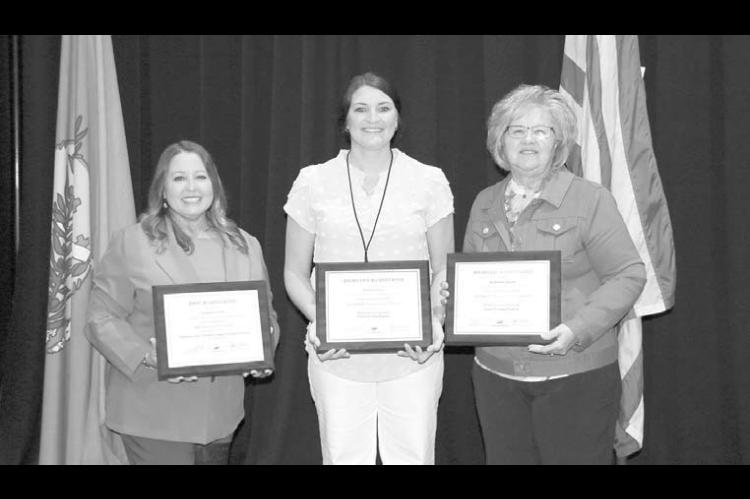
Kingfisher County First Deputy Clerk Tashandra Eaton and Deputy Clerk Amberlee Green recently achieved Basic, Advanced I and Advanced II certifications through the County Training Program (CTP).
CTP is part of the Oklahoma Cooperative Extension Service at Oklahoma State University (OSU) and is mandated by state statute and authorized under the Commission on County Government Personnel and Training.
After completing a minimum of 63 hours of instruction for Eaton and a minimum of 39 hours for Green to achieve their Basic Certification, Eaton completed an additional 48 hours to achieve Advanced I Certification and Green completed an additional 30 hours to achieve Advanced I Certification.
To achieve their Advanced II Certification, Eaton completed an additional 36 hours for a total of 147 hours of coursework and Green completed an additional 30 hours for a total of 99 hours of coursework.
Eaton and Green were honored at the 2024 County Clerks and Deputies Association of Oklahoma Annual School held recently in Durant.
The County Clerks and Deputies Association of Oklahoma, in partnership with CTP, instituted a voluntary certification program in 1992, which included an initial basic level of certification.
In 2000, the program adopted an advanced I level.
In 2004, an advanced II level was added.
Since the program’s inception, more than 535 clerks and deputies have successfully attained certifi cation.
Coursework for county clerks and their deputies encompasses subjects such as basic accounting; the county budget process; managing personnel; land records; and customer service. The program also contains courses focused on the Oklahoma Statutes, the Open Meetings and Open Records Acts and a variety of courses on supervisory skills.
Instructors from OSU teach these classes at various locations throughout the state, including on the university’s campuses in Stillwater and Oklahoma City.
In addition to county clerks, the OSU staff also teaches classes for other county officer certification programs.
Many of the courses, which are usually taught in a classroom setting for 2550 people, are attended by representatives from each of the elective and appointive agencies in county government.
Some classes are offered asynchronously online, allowing participants to complete the course at their own convenience.