
Deep Freeze Revisited
Did we learn anything from 2021’s most catastrophic weather event?
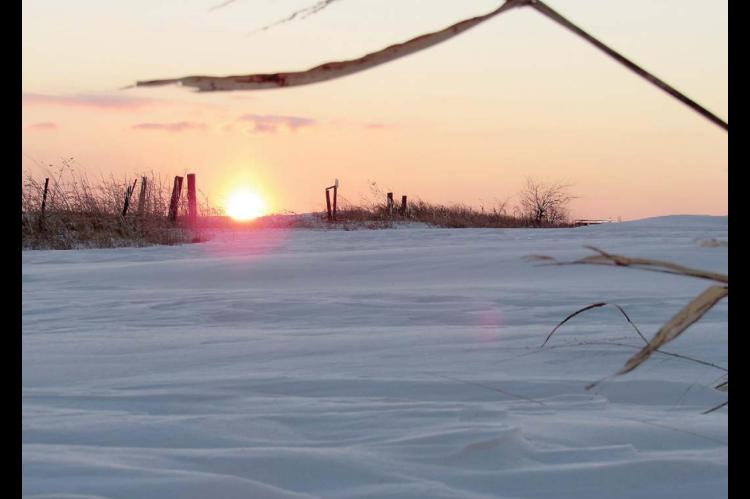
With November’s release of the Federal Energy Regulatory Commission’s final report, last February’s arctic freeze and its impact on the Oklahoma and Texas electrical grids is back in the news.
An Oklahoma Corporation Commissionn meeting last week focused on the report’s recommendations and included presentations from Oklahoma Gas & Electric, Public Service Company of Oklahoma and Liberty Utilities as to how those public utilities were responding.
A Perfect Storm
The unprecedented 12-day arctic cold mounted a triple attack on electrical generation and distribution.
Iced over windmill blades and overcast skies took wind- and solar-generated power sources completely offline and the bitter cold created supply and pricing issues with natural gas.
“During the event, extreme cold temperatures and freezing precipitation led 1,045 individual bulk electrical system generating units...in Texas and the South-Central United States to experience 4,124 outages, derates or failures to start,” according to the report.
Cimarron Electric Cooperative CEO Mark Snowden helped the Times & Free Press translate the technical jargon:
“‘Derate” is when a plant can’t run at full capacity but manages to stay online,” Snowden said.
“Many natural gas-powered plants weren’t getting the natural gas pressures they needed and had to cut their units back from 100% capacity to something lower.”
FERC described last year’s freeze as “the fourth cold-weather-related event in the last 10 years to jeopardize (generating unit) reliability” and was “the largest controlled firm load shed event in U.S. history.”
“Controlled firm load shed” is what is more commonly known as “rolling blackouts,” Snowden said.
“We have to have rolling blackouts when the power grid is about to suffer catastrophic failure, “ he said. “When there are now plants to bring online because of fuel issues like we saw last February, the Southwest Power Pool and the electric utilities have to start taking electric circuits off line as fast as possible, in a coordinated action, to prevent the entire grid from tripping offline in order to save the power plants.”
Kingfisher County got a very limited taste of that process last February as surging demand and dwindling supply disastrously collided, but nothing like what Texas residents experienced with their own power pool.
Eight of Cimarron’s 20 substations systemwide were powered off and then back on by officials at the Southwest Power Pool, with no control at the local level to protect vital energy resources.
That’s something that Snowden hopes will be avoided in a future event.
“We have been participating in a readiness exercise with the Oklahoma Corporation Commission and Western Farmers Electric Cooperative for this upcoming winter,” he said.
“Should we have another serious cold event like last winter and the need arise to shed load through rolling blackouts, we have worked with our main natural gas producers to identify their critical loads.
“Should we need to begin rolling blackouts, we have coordinated our circuits in a way where we won’t disrupt the flow of natural gas through our system so that power plants aren’t affected.”
Rolling blackouts were threatened but were narrowly avoided last February in city of Kingfisher, part of the Oklahoma Municipal Power Association.
Unlike most of the state’s public utilities, OMPA was able to absorb its $60 million debt from the surge in natural gas prices during the surge rather than pass that on to consumers via rate increases, City Manager Dave Slezickey said.
“OMPA financed the debt from last year on a fiveyear note and used some reserve funds for decommissioning a coal plant and rate stabilazation funding to absorb the debt instead of passing it on to our member communities,” he said. “PSO, OG&E and ONG
“PSO, OG&E and ONG have sought rate increases to recover costs and are seeking more rate increases to prevent or prepare for another similar event.”
The FERC report made recommendations “in response to the continued failures of generating units due to freezing issues.”
The recommendations addressed natural gas infrastructure cold weather reliability as well as issues related directly to the electric generation and transmission.
Justin Mecklenburg of Kingfisher, whose nationally-recognized company Neoinsulation manufactures and sells insulation products for the energy industry in six regions across the country, noted a 23% increase in his product sales in Texas this year as compared to last.
“Now, it is very difficult to identify if we have seen that increase as a result of (FERC) winterization recommendations or operators simply voluntarily winterizing their equipment properly to avoid similar results from last year,” he said.
The company has seen a decline in revenue in Oklahoma over the same period, which Mecklenberg attributes to “the overall decline in activity in Oklahoma and budget constraints.”
“Texas is certainly taking the lead with activity and being more proactive in winterization efforts,” he said.
“We are insulating facilities and equipment that we have not insulated in the past.”