
Goodbye grocery tax: Elimination of state tax on grocery starts Thursday
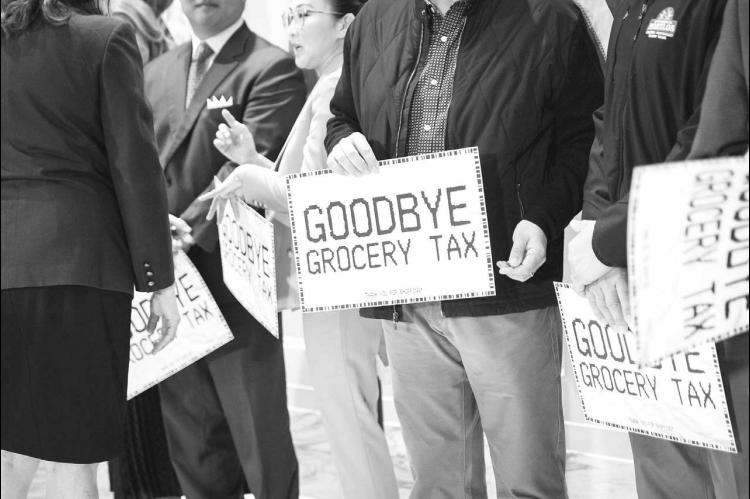
Grocery stores across the state are ready to remove the state 4.5% sales tax from groceries beginning Thursday (Aug. 29).
Most local retailers have indicated the conversion would not be difficult to complete as cash registers are already programmed to make the change.
Traditional food items and ingredients like vegetables, uncooked meats and baby food will be less expensive while items such as rotisserie chicken, toiletries and vitamins will still be taxed.
The state estimates the tax cut enacted by the state legislature at the urging of Gov. Kevin Stitt, who signed the bill in February, could save the average Oklahoma family $650 a year.
However, shoppers were advised that city and county taxes will still apply.
Store employees have been trained to explain how the tax applies.
The Oklahoma Sales Tax Institute provides the following information: The bill also restricts any increases in local sales taxes from affecting food and food ingredients until June 30, 2025, adding: “The zero rate does not apply to alcoholic beverages, dietary supplements, marijuana products, prepared food or tobacco. The state definition of food and food ingredients qualified for the exemption does include bottled water, candy and soft drinks.
“Prepared food is defi ned as ‘food sold in a heated state or that is heated by the seller, two or more food ingredients mixed or combined by the seller for sale as a single item, or food sold with eating utensils provided by the seller, including plates, knives, forks, spoons, glasses, cups, napkins, or straws.’
“As a Streamlined Sales Tax member state, the bill also included adoptions of the Streamlined Sales Tax product definitions for these items.
“‘Food and food ingredients’ means substances, whether in liquid, concentrated, solid, frozen, dried, or dehydrated form, that are sold for ingestion or chewing by humans and are consumed for their taste or nutritional value. (2023 OK H 1955, Enacted, (Feb. 29, 2024).”
The move by Stitt and the legislature was pushed through as the state is experiencing a healthy financial picture, but families have been experiencing ever-increasing grocery costs.
Stitt signed House Bill 1955 on Feb. 28.
“Oklahomans have waited for this day for years and I’m proud to be the governor that Oklahomans chose to eliminate the state portion of the grocery tax,” said Stitt at the ceremony. “I’ve called for tax cuts every year since I’ve been in office – and when we see such broad bipartisan support for a bill like this, we know we’re doing something right. I’m proud of Pro Tem (Greg) Treat and Speaker (Charles) McCall for their hard work and dedication to returning money to our fellow Oklahomans.”
Added Treat: “Cutting the state portion of the grocery tax has been a priority of mine for several years.
“I appreciate and applaud the governor for signing this important piece of legislation. Once it takes effect, it will begin to save Oklahomans hundreds of dollars per year at the grocery store. I also appreciate my Senate colleagues and our House counterparts who worked hard to deliver this for everyone.”
McCall said: “ “I would like to thank my colleagues in the House for their tireless work over the past three years, passing multiple tax cut bills to try and help the citizens of our state. Their efforts have made today possible.
“I would also like to thank Gov. Stitt for his leadership throughout this process and his unwavering support in cutting taxes. He has been an ally and vocal proponent of getting tax relief legislation to his desk and I am glad we finally got this across the finish line.”
Officials will have to wait to see how the tax cut affects the state’s bottom line.
A recent release from the Oklahoma Office of Management and Enterprise Services (OMES) stated General Revenue Fund collections for the month of July – the first month of fiscal year 2025 – totaled $620 million, which is $10.8 million, or 1.8%, above the monthly estimate.
It was $17 million, or 2.8%, above collections in July 2023.
“Our state’s general revenue collections are off to a strong start this fiscal year, coming in slightly higher than the estimate and even surpassing last year’s numbers,” said Katie DeMuth, interim director of OMES. “In the coming months, we’ll closely monitor the impact of the grocery tax cut, but we expect the state’s revenue to continue performing in line with projections as the year progresses.”
The state anticipates the grocery tax cut will affect sales tax revenue collections starting in September.