
HPS wins grant to assist ELL students
Hennessey Public Schools will conduct a one-month summer program for fifth through eighth grade ELL (English language learners) who are struggling readers, and students who have been long-term ELL students who continue to struggle.
Classes will be four days a week (Monday-Thursday) from 9-11 a.m. June 1-30 at the middle school.
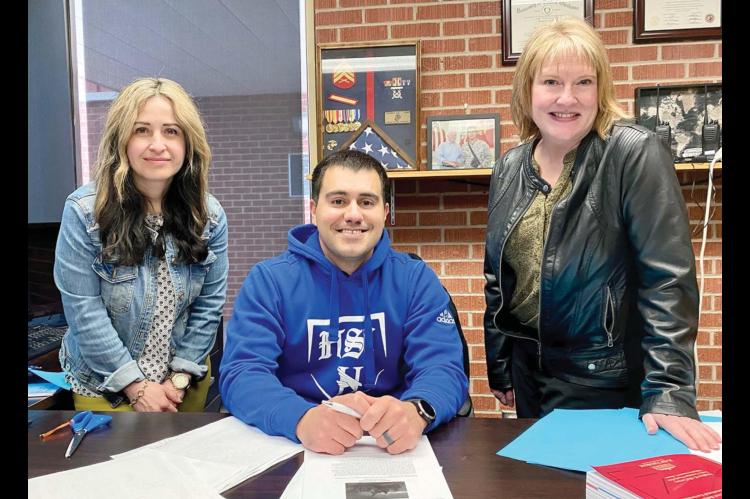
ELL teachers Lissette Sosa and Amy Shelite are co-directors of a $215,000 grant to fund the summer and fall before-and-after school classes. Both said they are “excited” to get this program started.
Sosa is elementary school ELL director, and Shelite teaches ELL in the middle and high schools, fifth grade reading, and high school special education.
The grant was approved for the first year through the state Department of Education. It will be available for renewal each year. The state received that money from federal Corona Virus Relief Funds for schools, and ELL students who were particularly impacted during school closings and at-home learning during Covid.
“Together con Éxito”
OSU Professor Dr. Joe Tarantino applied for the grant, along with the two Hennessey teachers.
His program, “Together con Éxito” (Succeed Together), will be used in both the summer and fall classes in Hennessey.
That program is based on a variety of literacy and math activities including: “fun and interactive, game-based learning, teacher-to-student teaching, high school student-to-middle school student tutoring, parent and child reading, and reading in the community.”
He is passionate in his support for public education and dedicates his work to help language teachers, and teachers of English learners, said Shelite.
Local churches, including The Cristo Rey Baptist and St. Joseph Catholic churches, will partner with HPS and OSU in the program. The public library, businesses and others in the community have also offered to help with the program.
Summer ELL enrollment
Parents of fifth through eighth grade students are encouraged to enroll their children soon for the 9-11 a.m. Monday-Thursday June 1-30 summer classes. Sign up with Lissette Sosa (405-853-4305), or Amy Shelite (405-853-4394, ext. 218).
Breakfast will be available at 9 a.m. and lunch at 11 a.m.
Classes will include help for struggling ELL readers and basic math, or help with students struggling in other areas.
Kim Gritz (high school science) will be a teacher in the summer, along with paraprofessional Rosa Velazquez. High school students will also be selected to serve as one-on-one tutors with the middle school students.
The school’s child nutrition program will provide breakfast and lunch during all of June. That meal program is state-funded, and is available to all students, not just ELL program students.
Fall classes
Newcomer ELL classes — New students may be in the welcome program with a parental liaison, or educational program after school one day each week.
Before school classes — 7:20-8 a.m. four days a week (Monday-Thursday). English phonics for low proficiency students in MS reading teacher Lezlie Hardin’s classroom.
After school classes — 3-4:30 p.m. two days a week (Monday and Tuesday). Students will receive tutoring assistance with their classroom assignments, as well as phonics instruction and reading strategies. Teachers will be Elizabeth Marin (HS Spanish); Jenna Matousek (HS English), and Kim Gritz (high school science).
Paraprofessional Rosa Velazquez will also help with the sessions led by Marin and Matousek. Students will be furnished with after-school snacks.
All of these before and after school sessions are in addition to regular ELL classes.
Identifying ELL students
English Language Learners are determined by completion of a “Home Language Survey” in which parents complete, according to the school’s guidelines.
This survey provides information regarding which language is spoken in the home more often, Spanish or English. Based on that information, students are then placed in the ELL program.
They are also administered a “screener test” to determine their language proficiency.
Then in the spring of each academic year, those ELL students are administered a test to again determine their English proficiency. If the student attains a high enough score, they are monitored for the next academic school year, and are considered a “first year” monitored student, and not an ELL student.