
OBO launching new ARPA fund process
Editor
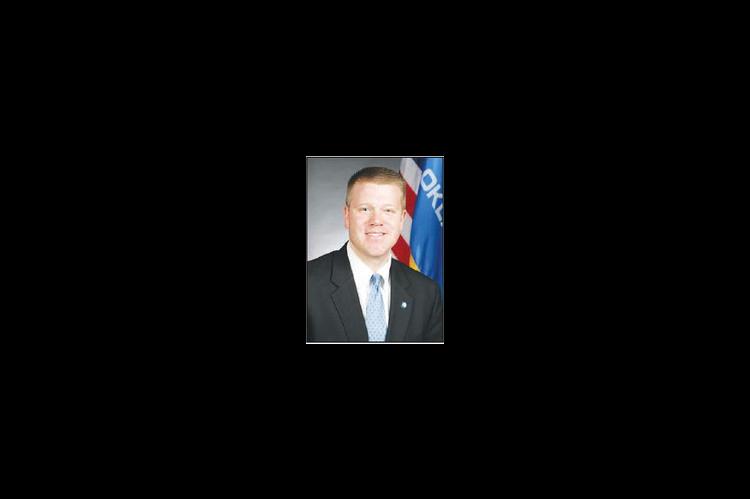
When Mike Sanders walked into his new Oklahoma Broadband Office digs five months ago, his office didn’t even have…wait for it…internet.
“We didn’t have paper, there were no copy machines and no phones,” said Sanders, who was selected to serve as the state agency’s first director.
The OBO is tasked with ensuring affordable, dependable broadband internet service to the unserved and underserved in Oklahoma - a number the office says is more than 720,000 people - over a five-year period largely through administering about $1.3 billion in funds.
Part of that process had to go through a reboot when the OBO announced last month it was going to implement a new application process for the $374 million in American Rescue Plan Act funds.
Sanders’ office released last week a Notice of Funding Opportunity (NOFO) for the program.
Internet Service Providers (ISPs) can submit competitive proposals for their piece of the funds beginning Monday, Sept. 18, through a portal on the office’s website (https://oklahoma.gov/ broadband.html).
The portal will close on Oct. 9.
This is the first grant program administered by the office. Others will follow, including $167.7 million from the ARPA Capital Projects Fund and $797.4 million in Broadband Equity, Access and Deployment funds.
“Today marks an important step in making good on our commitment to bring this critical service to those who need it most,” said Sanders, a former state legislator from Kingfisher.
“Many months of hard work lie ahead but make no mistake, we are going to deliver for Oklahoma’s rural and unserved communities.”
For Sanders and his staff what little there was at the time - the work began on that very first day.
“We started with toothpicks and duct tape and were tasked to go fix internet service,” Sanders said. “It was an interesting first few weeks to put our eggs in order and put in a battle plan.
“But we are following that plan and we are on the right footing.”
Prior to Sanders taking over and even prior to the formation of an OBO, a portal was opened for ISPs to submit bids for ARPA funding.
The OBO explored the possibility of creating two classes of applicants in its process of dispersing the funds: One class would be those ISPs who submitted applications during the original portal period and another for those who didn’t apply through the portal, but would be providing service in areas of the state not covered by the portal applicants.
Deputy Attorney General Niki Batt sent a memo to the Broadband Governing Board stating in part: “Reliance on the ARPA portal is largely backward-looking because applicants submitted projects or proposals to the state, prior to the creation of the OBO or the Oklahoma Broadband Expansion Act…” Batt suggesting merging the two classes of applicants “to accomplish the same important goal of awarding grants to providers that will ensure unserved and underserved areas have access to high speed broadband and is able to do by the Dec. 31, 2024, deadline.”
Still the nine-member Broadband Governing Board voted July 11 to adopt the class system.
Time was one of Sanders’ concerns in pushing forward with that process.
“We are on a time frame,” he told the Times & Free Press on Friday morning. “We’ve got to get these monies out no later than December 2024.
“We have to have these projects that are ARPA-related operational and working by 2026. That may seem like it’s a lot of time, but there are supply-chain issues and workforce issues that will make it challenging for some.” All the while, Sanders was also building his staff. First came his chief of staff. Then came a director of finance.
“It was mind-boggling that we didn’t have one, yet we were tasked to disperse $1.3 billion,” Sanders said.
He added an ever-so-important compliance staff and a communications staff.
“In five months we’ve built capacity, put in policies and procedures and gotten the OBO where it needs to be,” Sanders said.
That included dialing back his original plan for the class system and implementing the completely new proposal process that opens this week.
Despite the setback in time, Sanders is confident his office will fulfill its obligation to implement the funds by the federally-mandated dates.
“We will beat it,” said Sanders of that December 31, 2024, deadline.
The new process received approval of the Oklahoma Broadband Governing Board last week. Full details of the ARPA grant process are available on the OBO’s website as well (https:// oklahoma.gov/broadband/ grant-programs/arpa-slfrf. html).
“Kudos to my team for getting this put together,” Sanders said. “Putting the right people in place is key to running an organization like this.”
After the proposal submission window closes, an Overbuild Prevention Contest Process will be launched to allow ISPs to review the proposals and help ensure no funding is awarded to provide service to homes and businesses that already have high-speed internet access.
“We absolutely don’t want to overbuild,” said Sanders. “And we’re going to stretch every dollar. That’s our mission. We’ll do it the right way.”
The board, which provides oversight of the OBO, will have final approval over projects recommended by the office for funding.
That action is anticipated to occur in January.
“When we announce those projects in a few months, it will be rolling,” Sanders said.