
Oklahoma Governor sparks controversy with sweeping vetoes, prompting legislative backlash
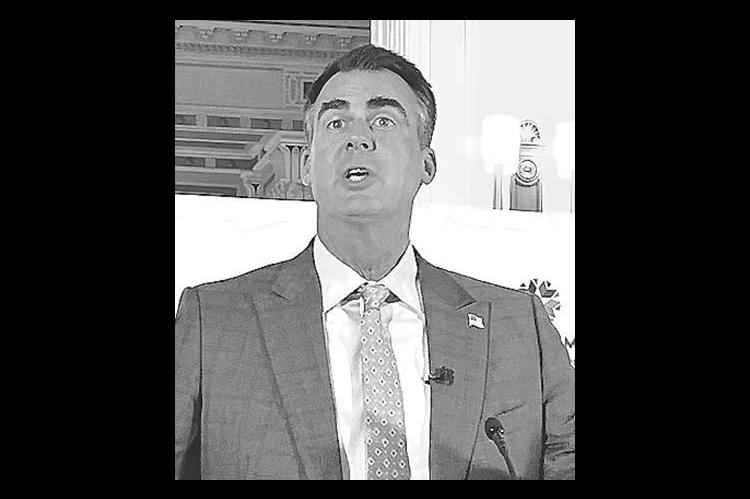
Oklahoma Governor Kevin Stitt has ignited political disruption after issuing a sweeping wave of vetoes that confused lawmakers, lobbyists, and citizens across the state. The governor, who is serving his final term through 2026, rejected a broad range of bipartisan legislation in what many are calling an unprecedented and disruptive move.
This latest round of vetoes mirrors a similar action taken by Stitt on April 26, 2023, when he vetoed 20 Senate bills, drawing sharp criticism and widespread attention. Political observers and some legislators have described his latest approach as “scorched earth,” aimed at pressuring the state Senate to align with his policy agenda.
The vetoes impacted bills across various policy areas, including student athlete rights and the wearing of tribal regalia at graduation ceremonies. Despite broad bipartisan support for many of the bills, Governor Stitt rejected them, intensifying ongoing tensions between the executive and legislative branches.
In a strong response, the Oklahoma Legislature overrode 19 of the governor’s vetoes on Monday—one of the largest override efforts in recent state history, according to NonDoc, a publication focused on Oklahoma politics. Among the overridden bills was SB37, introduced by Speaker Pro Tempore Rep. Anthony Moore (R-District 57). The legislation empowers the Oklahoma State Bureau of Investigation (OSBI) to respond to mass casualty events, as defined by the bill, and creates a dedicated Mass Casualty Revolving Fund.
“I’m extremely disappointed that our Governor is choosing political one-liners over the safety of citizens throughout Oklahoma, especially victims of mass casualty events,” said Moore.
Another high-profile veto targeted HB2167, a bill that passed both chambers overwhelmingly. The measure would have raised the rate for publishing legal notices in newspapers from 15 to 22 cents per word and increased the rate for subsequent insertions from 14 to 20 cents. It also would have required newspapers to publish these notices online at no additional charge. Proponents noted that publishing rates haven’t increased in Oklahoma for two decades.
Governor Stitt argued that the changes would “signifi cantly” raise the cost of legal publishing.
“Legislators clearly know and understand the need for this legislation, despite the governor’s veto,” said Mark Thomas, Executive Vice President of the Oklahoma Press Association. “We hope the House and Senate will override the veto and allow these important reforms to become law.”
Some of the other vetoed bills include: SB54 (Rep. George): Removes the time limitation for analyzing blood or breath alcohol concentration in certain cases.
HB1216 (Rep. Kevin West): Establishes a $500 fine for first-time violations of Construction Industries Board regulations.
HB1137 (Rep. Stewart): Expands provisions related to Missing and Murdered Indigenous Persons in Oklahoma.
SB128 (Rep. Pae): Adjusts the eviction timeline by extending the period between a summons being issued and the eviction hearing.
As the standoff between Governor Stitt and the Legislature continues, Oklahoma’s political landscape faces growing uncertainty, with many watching closely to see how lawmakers will respond to the governor’s aggressive use of veto power.