
Retirement Re-imagined
Sometimes best path forward is a U-turn, former chief says
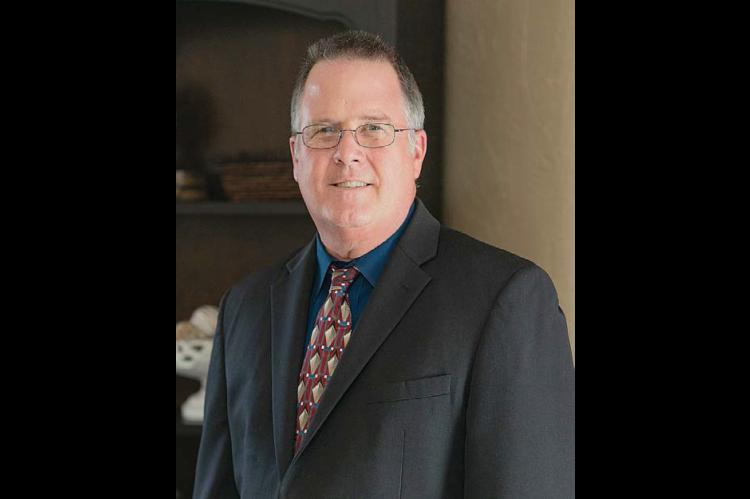
When Dennis Baker decided to retire from the Kingfisher Police Department in March 2020, he was thinking about more leisure time with his growing family and his favorite hobbies.
Becoming a licensed funeral director a little over three years later was not even on the radar.
But then again, his story is far from the only bizarre turn of events triggered by a pandemic.
“I retired officially on March 9, 2020. That night, the city commission appointed David (Catron) as the next chief. The following day was my retirement reception,” he said. “Before that week was over, we were on COVID lockdown.”
Baker had spent months carefully planning what he expected would be a smooth transition, delaying his retirement until he could hand Catron the keys to a fully-staffed, fully-funded, well-oiled machine of a police department.
“And then in less than a week, David and the guys had their world jerked out from under them,” Baker said. “They can’t buy anything, can’t do anything and half the department comes down with COVID.
“Then comes the violence andprotestsagainst the police across the country. It was a tough season and I couldn’t do one thing to help.”
The deep dive in the stock market at the start of the pandemic also slammed Baker’s invested retirement account, creating anxiety about his financial future.
All of a sudden, retirement didn’t feel like the joyful event he had long anticipated.
“When you’ve done something so long that that’s all you think about, a job where you’re on a constant state of high alert, even when you’re not working, you can’t just turn that off like a switch,” he said.
“I didn’t know what I was supposed to do. I worried about the department but I didn’t want to interfere. I felt lost.”
In his search for something to occupy his time and maybe generate a little bit of income, he reached out to his old friend and high school classmate Chad Sanders.
But even though that wasn’t his original retirement plan, it wasn’t a decision made out of the blue.
More than 30 years ago, Baker was disillusioned with his job at the police department and casting about for an alternative career.
“One of the things that I was really interested in was being a field investigator for the medical examiner’s office,” he said. “What they wanted as far as educational requirements was training either as a paramedic or in mortuary science.”
So Baker started taking classes at the University of Central Oklahoma’s mortuary science program about the same time Sanders was completing his degree to work at his family’s funeral home.
“I talked to Chad and my thought was that I could
[See Baker, Page 12] get the qualifications for a potential career at the ME’s office and then after I retire I could circle back and get a part time funeral home job,” he said.
But then former Kingfi sher County undersheriff Tom Jones was hired as police chief and the department “took a huge turn for the better,” Baker said.
He set aside his mortuary science goals and doubled down on his law enforcement career, moving up through the ranks to eventually become assistant police chief and then chief at Jones’ retirement.
Fast forward to 2020 and Baker again found himself at loose ends in a retirement that so far was not as fulfilling as he’d anticipated.
“So, I reached out to Chad and said if you’ve got some part-time work that I can do here or there, consider me available,” he said.
“When restrictions started to be lifted, Chad called.”
Then when Chad’s father Rusty’s health started declining, “it turned into more or less helping with everything all the time. It kind of turned into a fulltime thing.”
When Baker’s wife Lora saw that she was starting to see her husband “even less than when he was a cop,” she found ways to become involved also, when not working at her regular job at the local Corporation Commission office.
“I help Chad out with ‘first calls’ when he gets busy,” Lora said. “That’s our first contact with the family of the deceased where we start the paperwork and make arrangements to bring the body back to the funeral home.”
And both the Bakers have been studying to earn the necessary licensure to arrange pre-planned funeral packages.
“I’ve taken and passed my license test and Lora tests on Sept. 12,” Baker said.
A lifelong man of faith and active member of the Kingfisher Church of the Nazarene, Baker often has been asked to preside over funeral services when the family or the deceased are not members of a particular church.
“The (state) funeral board reduced the requirements for a funeral director only certification,” he said, noting that to serve as a funeral director, embalmer and funeral home manager requires a full degree.
“A funeral director only license would allow me to do at-need arrangements (at the time of death, as opposed to pre-planning prior to death) and meet the requirement that a licensed director has to remain on site until the body is actually lowered into the ground,” he said.
“ I only need 17 additional hours and I’m enrolled in six this fall,” he said. “Within a few semesters, I should be able to knock the rest out.”
And serving as funeral director, officiant and pre-planning assistant are just a few of the roles he and Lora have found themselves taking to assist families in their time of need.
Both also sing and have performed both solos and duets during funeral services.
“Every turn of events has brought me in deeper and deeper to this role,” Baker said.
“We talked about it before he or I decided to become involved, but the conversation was that he was going to help out a few days here and there,” Lora said. “We didn’t have a concept of how big it would become.”
Long and unpredictable hours. A front row seat to death, loss and the worst days most families will face. Somehow it doesn’t sound like a lot different than Baker’s former fulltime job.
“It’s a lot less stressful than the police department,” Baker insists.
“Everything we do is to help families navigate that very difficult time and process all that and make sure they don’t skip steps and are able to plan out their loved ones’ celebration of life.
“It’s a natural part of the grieving process and the process of closure. Helping families through that feels positive and rewarding.
“It’s a privilege and a blessing to me to be able to be a part of that.”