
State cracking down on illegal grow operations
OBN officer tells Kingfisher Rotarians his bureau has more than 500 active cases
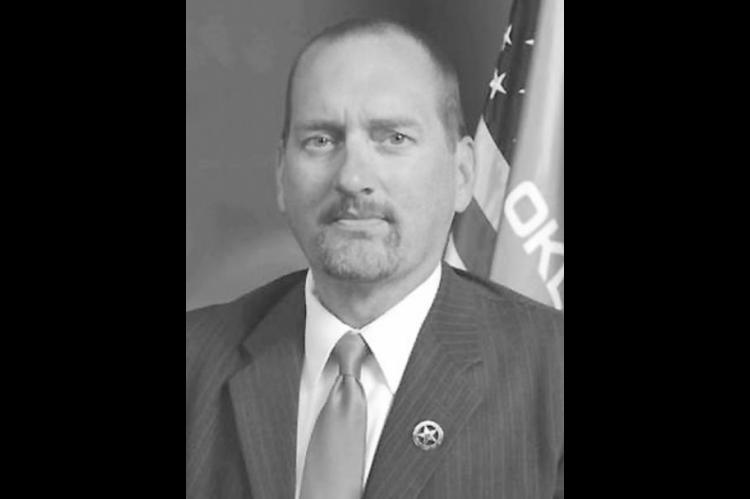
There are currently more than 500 active investigations into suspicious marijuana grows in the state.
That was the shocking number Mark Woodward, public information officer for the Oklahoma Bureau of Narcotics and Dangerous Drugs, told Kingfisher Rotarians and guests.
Speaking at the club’s semi-monthly meeting recently, Woodward said many of these grows in rural Oklahoma look like military operations with high fences, guards armed with automatic weapons and compounds with unsafe and squalid living conditions for those growing and producing the plants.
“It’s in all 77 counties of our state and it’s all about black market cannabis being managed by Chinese and Mexican entities, with human trafficking networks involved, along with unsafe living conditions, chemicals and water sources also involved,” he said.
Woodward said the most common practice is for these criminal organizations to come to Oklahoma, get completely licensed, follow the rules and “fly under the radar” while 100 percent of their product is going to the east coast and the profits are being moved all over the world.
Why Oklahoma?
Woodward said the cost of licenses and the cost of doing business in our state is much lower than other states such as New Mexico, California, Arizona and Nevada.
“That window is closing rapidly; our state is on to them,” he said. “We’re exposing the layers of the onion and actively seeking out these criminals and we’re in the process of shutting them down.”
Woodward said the OBN was actively investigating these complicated relations and he noted that one law firm in the state had billed out more than $18 million to these multi-layered black market operations.
He noted there are brokers and law firms that are very up to date on Oklahoma’s rules and regulations and they are maximizing their profits before the OBN begins to close the loopholes that were opened up through the wording of State Question 788, the Medical Marijuana Legalization Initiative, which legalized the licensed use, sale and growth of marijuana in Oklahoma for medicinal purposes.
“No new licenses are being approved. We now know who the brokers are,” Woodward said. “Renewal licenses are being denied and we no longer are a safe haven for these criminals.”
Woodward said the typical operation procedure for these black market growers was to have a representative show up at the front door of a landowner and ask if they would like to sell their land to them.
He said typically they would respond with a “No.”
Then the representative would show up with a suitcase full of cash that would be much more than the market value of the land, and offer again.
“That’s when people began to accept the cash payments,” he said.
Brokers and lawyers have all the paperwork set up and ready to go, Woodward said.
He added that the land owners who sign up then begin to discover they are involved in ownership of an illegal Chinese and/or Mexican drug operation and they may face serious legal issues for their participation.
Woodward said the brokers know who to approach. He said they know who may be in financial difficulty.
Their local intelligence is very good and these black market entities have local people employed through these brokers to help them locate their future operations, he said.
Woodward went on to say that Oklahoma’s medical marijuana law has unintentionally made our state the national center for illegal growing operations.
“Part of the reason it all came to Oklahoma was COVID, because almost everything was shut down in states like California, but cost was also a factor,” Woodward said.
“The reality is these, illegal organizations are paying up to three times what pieces of land are worth and still coming out ahead.”
Woodward said a grower who was paying tens of thousand of dollars for a license in California – and hundreds of thousands for land – could get an Oklahoma license for $3,000, which is the cheapest in the nation, and could also acquire land here for a fraction of the California costs.
He added that Oklahoma’s regulations are currently much looser than other states, which attracts both legal and illegal growers, and some of the legal ones are actually “ghost” operators with a local front person and actual ownership in communist China or through a Mexican cartel, or both.
Woodward was introduced to the club by Kingfisher Rotarian and Oklahoma State Senator Darcy Jech, who arranged for the presentation.