
Studying Abroad: Sleeping in airports, dancing in villages
By the time I landed in Harare, Zimbabwe, I was down a bottle of sunscreen, personal hygiene and morale.
The expected travel time of roughly two days had been doubled when a 48-hour layover was tacked on to our trip.
Our first flight out of OKC had been delayed by two hours due to weather and when we reached the Dallas- Fort Worth airport, our connecting flight was rolling down the runway.
We missed boarding by 10 minutes.
Triple that time that day was spent watching the baggage claim go around and around.
Around again. My faithful gray suitcase had been claimed, but a dozen people were still missing their bags.
While our professor, Josh Taylor, was talking to anyone who may know where they had disappeared to, one of my fellow classmates was alerted by his Apple air-tag that his bag sat patiently at DFW.
So, we were off to a slightly rocky start and at this point I wanted to call my mom, but my phone refused to ring.
Nevertheless we gathered in a group around the luggage we did have and remembered where we were. The first night that hope felt lost sleeping on airport benches, we booked a flight out in 24 hours.
We were about to experience situations that half the people we knew may never get to.
Josh agreed: “Through those doors is why you all came. Why you signed up.”
This sentiment lifted our heavy steps and we left the airport to finally begin our trip.
Which we did right away. Now that two of our 11 precious days had slipped away, we had no more spare time to lose.
Straight from the airport we drove to a wildlife reserve.
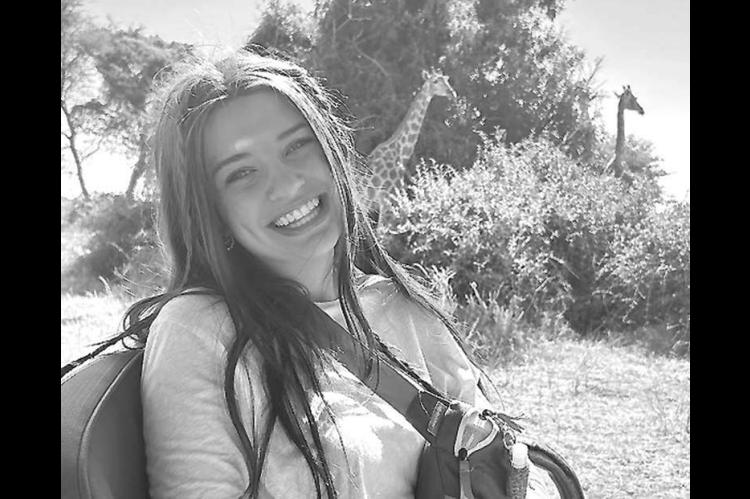
There is nothing quite like a dozen giraffes a few feet from you to truly welcome you to Africa.
We were able to walk beside them in their enclosure and zebras and elands soon followed.
A few lazy crocodiles saw us out and soon our first day was over.
The next day we started as early as the rooster’s first crow.
Literally. Dr. Trent, our host, had a chicken coop right behind the house where the girls were sleeping and roosters that were exceptionally loud.
It was for the best, though, because we had a long day of driving to reach the rural schools and villages.
The next two days we would spend at Dr. Trent’s rural homestead and tour local schools.
This was an experience that truly immerses you in their culture and lifestyle and an opportunity not many get.
We were able to watch the children in class and see their eagerness to learn. Not a single desk was empty and more often than not, the dirt floors were filled with more students with nowhere to sit.
One of the schools we toured was installing a borehole the day we arrived. Before this “luxury,” children had to cross a busy street and walk upwards of three miles to get water.
Tragically, a child was hit by a car and the need for water on school grounds increased.
This life-giving water will be surrounded by a garden and we saw this creativity in other schools that had already put this idea in place.
Many schools did not even have adequate space or roofing for the classrooms, but they had an abundance of joy they always showed.
At the end of every tour the students would bunch up together in the courtyard and sing us songs and dance.
We were always included. They giggled at our poor rhythm, but in these moments we were all one and we were all joyfully dancing.
That same night, more dancing was happening, but this time in the village.
We had eaten a traditional dinner around the fire - sadza, a flavorless solid that looked like hardened mashed potatoes and was used to pick up other foods, guinea, bread and cabbage - when the drums were brought out.
At this point we would all love to say we had gotten better at dancing, but this was untrue.
Either way though, we were celebrating and dancing to traditional drum songs from their culture.
We even got to teach them some of our “culture” and two-stepped to Garth Brooks.
When everyone was speaking of their favorite memories from the trip, the instances most spoke of were when we were dancing.
That night, once even the most experienced dancers had sat down, Josh took us into the wild grass to look at the stars.
There is no pollution of any form to cloud the views and laying on your back, you feel as if you can grasp the stars if you really stretch your hand far enough.
They were so vivid and bright and it was a view we all had trouble leaving for bed.
But we awoke to something better.
If the night sky was beautiful, then the sunrises took your breath away.
Bright, bright pinks and vivid oranges stared at you while you slowly moved around at breakfast.
The roosters seemed to follow us everywhere, because the whole trip there was not a day we did not wake before the sun did.
But it was a trip of a lifetime and we did not want to let a single moment go to waste.
On our last day in the rural villages, we saw what a normal homestead looks like.
Dr. Trent’s rural home had been renovated and was not the typical house.
The people here lived in mud huts with straw roofs and had toilets that were holes in the grounds.
They tended to their gardens and livestock all day and gathered water from a river miles away.
Each homestead we visited offered us hospitality I had never seen.
We left feeling humbled by our own lacking generosity and learned one of our most important lessons from our study abroad - “What lessons are we taking away for ourselves?”
The schools and villages had left our focus on how the children and villagers needed help, but it looked as if we did just as badly.
We spent four hours back to the city pondering this and then spent an evening around Dr. Trent’s fire refl ecting, eating and dancing more, because to them, no sorrow or hardship could not be fixed without “dancing it away.”
The next morning, we left for Victoria Falls, a tourist town that boasts the worlds largest waterfall in surface area.
This is where one of my favorite memories happened. To see Victoria Falls, there is nine points on the Zimbabwe side that showcase differing views.
All are stunning, but there is one point where the waterfall’s powerful stream has a wind that carries it over and it pours on you.
We were told to expect to get wet, but wringing water out of my hair on the hike down was not the amount I expected.
The view was spectacular and we all were amazed that something like this actually exists.
That night more views that seemed unreal greeted us again.
We ate dinner on a river cruise and when you looked to the left or right of you, hippos were swimming, or playing, or eating beside you. A few crocodiles even graced the banks.
Each day was taken on with childlike wonder. It’s hard not to when animals you typically only see in a zoo are walking on the street beside you.
Or in a safari van around you.
On the second and last day in Victoria Falls, we went on a safari in Botswana.
The van, it is important to note, is open on all sides. So when the tour guide gets closer, you truly get closer.
We brushed shoulders with towers of giraffes and saw hundreds of baboons playing with their young and swinging from trees above us.
The most heart stopping moment of the safari was watching a pride of lions eat a water buffalo they had just killed. One curious lion made his way over to the handful of parked vans and weaved in and out beside us.
It was amazing. The land part of the safari ended and we soon boarded a boat to take us through the Chobe River.
We saw a herd of elephants crossing the river to an island and were told by guides that while rare, hippos can attack these mighty creatures.
While we saw no hippo attacks, we saw bloats of them bathing in the sun.
As the day ended, we spent the night at a Boma drum show eating dinner with classmates who were now friends.
I had Kudu steak, which was an animal we spotted on the safari. It has long, faint stripes down its hide and large ears, like a mouse, but its body is the shape and size of a deer with large, twisting antlers.
It tasted great. I was asked many questions when I got back home about my trip, but many people were curious about the “weirdest food I ate,” and while a deer that has large mouse ears would seem the obvious answer, I always replied with guinea.
I think, even though my uncle is a farmer, that the guinea was the oddest because I held it hours before I ate it.
Everything was so fresh. I was not accustomed to the lack of processed, chemically enhanced foods.
I was also unaccustomed to eating every ounce of food with your hands, liquid or not. We would use sadza to scoop, but everything was done with their hands.
We ate like them every night, but on our last night, we fully embraced it.
We seemed to fully embrace everything on our last night.
We had flown back from Victoria Falls to Harare and spent the last night in a circle with students talking, laughing and crying.
The most surreal, life changing week of my life thus far was coming to a close.
Though I have not even lived a full two decades, I do firmly believe this week will stay a life changing moment as long as I live.
As we embraced strangers that were now friends and taught them our country songs and how to line dance to them, none of us could stop smiling and dancing.
This was my favorite memory. Everyone was one again and we were all so grateful for the week of experiences and changes that made us better humans.
I’m sure we could have danced all night, but an early flight and a rooster was waiting for us in a few short hours, so we were forced to bed.
An ocean away, I now have new friends and here at home I am better because of them.