
‘It’s Lifesaving’
Retired judge ‘whole-hearted’ supporter of sobriety homes
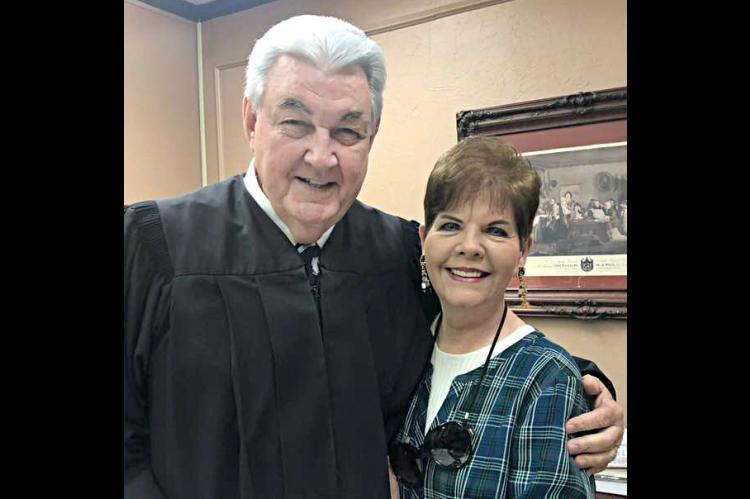
Retired Kingfisher County Associate District Judge Robert Davis said residents of a Kingfisher neighborhood who think they are protecting their family’s security by keeping out two proposed sober living houses are not seeing the real danger.
“The irony is, they should be more concerned about the houses already in that neighborhood where active drug users are living with no supervision,” he said. “I can tell you with absolute certainty that they are there and that’s the real risk to neighborhood safety.”
And Davis should know.
During his time on the bench, he’s seen plenty of defendants whose crimes were motivated and/or fueled by the alcohol and other drugs controlling their lives.
Not just property crimes such as burglary, theft and embezzlement, but also domestic violence and child abuse and neglect.
“While we did not keep exact numbers of offenses caused by drugs and alcohol, my honest belief is that it would exceed 50-60 percent,” he said.
Sending these offenders to prison may protect society for the period of their incarceration, but without addressing the underlying addiction, these individuals are likely to return to their same destructive lifestyles once released.
That’s why one of Davis’ first priorities as judge was to found the county’s drug court eight years ago, which allows qualifying offenders to remain in the community under strict court supervision while they complete a lengthy accountability program tailored to address their underlying substance abuse problems – before they start committing more serious crimes.
And, time after time, he’s seen the lasting changes that can happen in a long-term, faith-based recovery program like the kind Frontline Ministries is proposing in its Journey Center Sober Living Homes for men and women .
Davis said state and federal funding rules for drug courts prohibit any program with a religious element from being court-ordered (even participation in Alcoholics Anonymous, with its nonspecific reference to a “higher power,” can’t be court-mandated).
But drug court participants can choose to voluntarily participate in faith-based recovery programs such as My Brother’s Keeper in Oklahoma City and Adult and Teen Challenge (whose curriculum Frontline is adapting for its proposed facilities).
“Very few of the secular treatment programs have longterm success,” Davis said. “They’ll get you clean and sober but they don’t eliminate that need to return to addiction once you go back into your old environment.
“The drug court participants who were most successful at not only becoming clean and sober but also living a clean and sober life once they graduated were the ones in faith-based programs, bar none,” he said.
“I could almost tell you the day they graduated, if participants were in a program like MBK or others, they weren’t coming back,” he added. “The ones that went to secular programs came back clean but went back into to the same lifestyle and ultimately went to prison.”
Davis, who retired from the bench in December, said he read with interest the statements made by former drug offenders at last week’s city commission meeting attesting to the impact of faith-based residential recovery centers on their lives, particularly the testimony of Leo Padilla Jr., 37, of Kingfisher.
“Leo was not a drug court participant; he was a dealer as well as a user,” Davis said. “He was looking at a life sentence and I was prepared to give it to him.”
By agreement with the state, formal sentencing in Padilla’s case was delayed long enough for him to complete the year-long program at My Brother’s Keeper, Davis said.
Davis kept tabs on Padilla’s progress through the program, noting “every time I got a report on him, it was better and better.”
At the end of the year, Padilla presented himself at court on a blind plea of guilt, meaning he had no deal with the state and the length of his sentence was entirely at Davis’ discretion.
“He was facing six to life and I could have given him any number in between,” he said. “I gave him the six with a chance at review and he served less than two years because his behavior was exemplary.
“And since his release, he’s come back to the community, even knowing that every cop in Kingfisher was going to be watching him every day, but he’s stayed clean,” Davis said. “He’s out of that lifestyle.”
Those individual results are consistent with statistics provided by Frontlines Associate Pastor Ron Porter, who oversees the church’s 10-year-old, 12-step recovery program and has experience working in residential programs similar to the proposed Journey Center.
Porter told city commissioners last week that 68 percent of addicts who complete a one-year or longer faith-based program never return to their former lifestyles.
Part of the reason for that success is that such programs don’t just keep addicts sober for a year and then turn them loose; they teach them life skills and help them develop the kind of church and family support systems that allow them to return to the community as contributing members of society.
In Davis’ experience, providing that kind of foundation often means even those who “fail” the program may still eventually succeed.
“Many of the defendants that initially failed drug court and were terminated and sent to prison, later came to me and the drug court team and stated that they used the tools we gave them to stay clean when released from prison,” he said. “Several live in our community now as productive citizens.”
Davis has seen other defendants, like Leo Padilla Jr., who were ineligible for drug court, who still beat their addictions by participating in long-term, faith-based programs.
“Those committing crimes to feed a drug addiction were successful once the addiction was controlled,” he said. “I often lowered bonds or even OR’ed defendants (released on their own recognizance) who went directly to treatment beds.
“Many later said that it saved their lives.”
His experience behind the bench is why Davis is a whole-hearted supporter of Frontline’s Journey Center homes and would be even if its proposed location were next door to his own family residence, he said.
“I do believe this program would be successful and I trust the people running it,” he said. “I think we need it and once we see it in operation, we’ll realize all the safety concerns are unfounded.”
After all, he said, his own drug court and even the Center of Family Love’s small residential group homes in Kingfisher and Okarche faced some initial opposition based on the same kind of neighborhood security concerns.
“And now you don’t hear anything but good things about both programs,” he said.