
CITIZEN SOLDIER
2nd Lt. Pat Hallren U.S. Army Ranger
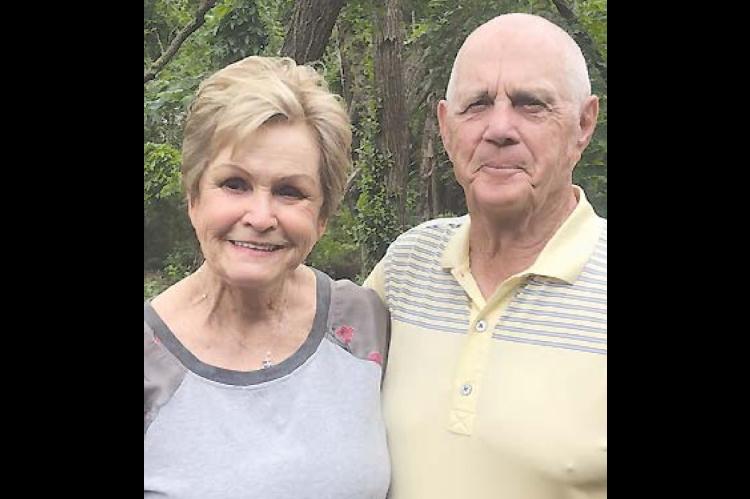
Pat and Ernestine Hallren made their home in Kingfisher from 1970 to 1989. I’m sure many Kingfisher area residents still remember them, as they were very active within the community and they have left a legacy here through their children as well.
Cherie Myers, Kim Boeckman and Clark Hallren all went on to successful lives and careers. Cherie, (a retired basketball coach named to multiple halls of fame) and her husband Randy still reside here as do two of their children, Heath and Haley, and their families.
Kim married Mike Boeckman and they raised their sons in Lindsay, where they still reside.
Clark went on to a very successful career in finance and resides in Palm Springs, Calif.
All three graduated from Kingfisher High School in 1975, 1977 and 1979, respectively.
I heard Pat and Ernestine mentioned many times within the community since I came here 37 years ago, but I never had the opportunity to meet them until last week when I made an appointment to visit them in their Edmond home.
Cherie mentioned to me recently that her father was an Army Ranger after graduating from the University of Oklahoma and it occurred to me that this was my opportunity to meet them and write a Memorial Day feature story.
Pat is quite possibly one of the best American success stories I have ever heard. There were many children from his era born in the Depression who went on to build businesses, raise children and live the American dream of civic duty, honorable service and patriotic honor for those who came before them.
By all measures, he has lived an exemplary life.
Pat Hallren was a “tweener” in that his time of military service was between the Korean and Vietnam wars.
In 1957, he graduated from the University of Oklahoma, where he was active in the Army ROTC program. After Officer Training School in Fort Benning, Ga., he was commissioned a second lieutenant and was accepted as a Ranger, which at the time was the most highly trained and toughest to get into “point of the spear” organization in the U.S. Army.
“You didn’t have to go to jump school as a Ranger, but I did it because they paid you $100 more a month if you were an Airborne Ranger and that was quite a bit of money at the time for a young man with a wife and child,” Hallren said.
“So I jumped as many times as they would let me.” “I always enjoyed jumping,” he said.
When asked why he wanted to be an Army Ranger, he replied he felt if he was going to go to war, he wanted to be among the best trained soldiers available and he wanted to know he could count on those next to him to do their jobs.
Hallren went on to train soldiers in Fort Knox.
“I never saw any combat during my two years of active duty,” he said. “The closest I ever came was a soldier who tossed a grenade the wrong way and I had to kick it into the hole as I grabbed him and hurried him away from the explosion.”
Luckily, Hallren said, he was at least somewhat prepared for that near disaster.
“Back then, you practiced by throwing a live concussion grenade and also a live fragmentation grenade. I was the officer in the pit with them. The way sergeants let us know we had a problem soldier is by putting an ‘X’ on the front of his helmet and two ‘X’s’ if they showed more serious problems,” Hallren recalled.
“Anyway, this particular kid had four ‘X’s’ on the front of his helmet, so I knew the sergeants considered him to be something of a risk. He threw the concussion grenade out of the pit just fine, but when he tossed the fragmentation grenade, he launched it stiffarmed and it didn’t clear the sandbags and bounced right back at us.
“They had a sump pump type hole in the center of the concrete pit for such occasions, so I kicked the grenade in there and we scurried out on the other side of the three-sided sand bag enclosure before the grenade went off,” Hallren continued.
“I always said that was the only life I saved while in the Army because his sergeants all came running as fast as they could with murder in their eyes looking for that kid after the explosion in the pit and I hurried him away to the next task station as quickly as I could to get him away from them.”
Hallren said he enjoyed his time as a Ranger and he and Ernestine considered making the Army a career, but his father called from Fairview, where he was raised, and told Hallren he needed him in the family poultry business more than the Army needed him.
“I don’t know. I was young,” Hallren remembered. “Call it family loyalty, intimidation, timing, whatever, but my older brother was already there and the business was growing and they said they needed me to grow it more, so we moved to Fairview after my two-year commitment was up.”
Hallren said he continued in the service with five years in the reserves after moving his young family back to Oklahoma.
There is a YouTube video called “This Afternoon 1958” of the old WKY television station “Channel 4” of Oklahoma City in which a WKY news team traveled to Fairview and did a segment interviewing Mike Hallren, Pat’s father, concerning his company, Hallren Poultry and Creamery Co., Inc., the largest employer in Fairview with 125 employees and growing.
In the interview, Mike mentions that the company intended to grow from 600,000 pounds of turkeys processed to 1 million pounds in 1959, when his youngest son Pat returned to the family business after his stint in the U.S. Army. Mike was a self-made
Mike was a self-made man who was forced to drop out of school in ninth grade and went on to start his creamery and butter business in 1936 in Sharon and grew it into the operation it became in Fairview.
“He was a natural salesman and he was driven to succeed and that’s the way our parents raised us,” Hallren said of his father.
Hallren said the business continued to grow and innovate during the 1960s with frozen turkeys being sent all over North America and even shipped overseas to Europe. But by 1970, profit margins were becoming tighter and tighter and it became economically impossible to bring in enough laborers to process the turkeys in Fairview.
“We closed the business down in 1970 and I bought a percentage of Burgess Manufacturing of Guthrie (a wooden pallet manufacturing operation),” Hallren said. “We moved to Kingfisher because Guthrie didn’t have much of a high school basketball program and Cherie and Kim both showed an interest in basketball.”
Kingfisher was suggested from a trusted source.
“Coach Rippetoe was a very respected basketball coach in Fairview and he suggested we move to Kingfisher because coach Joe Crabb was building a very good program there. It was a very nice fit for our family,” Hallren said.
“It worked because Ernestine was not one of those ‘you wait until your father comes home’ kind of mothers. I left early and came home late growing the business in Guthrie and she ran the family just fine in my absence.”
Their lives thrived in both towns.
“Our years in Kingfisher were great years. The business was successful and we purchased the controlling interest and it’s still operating today,” Hallren said.
“I loved it, but in 2001 Mr. Burgess’s son Bob expressed an interest in purchasing the company with a group of investors from Kansas and it was a good deal for both of us, so we sold it then and I stayed on as a consultant.”
Hallren said he and Ernestine always thought they would stay in Kingfisher “forever” when they sold their home to Randy and Cherie and purchased a lot here to build another one.
But, nothing is quite forever.
“We have quite a few friends in the Oklahoma City area and I enjoy golfing and Ernestine was coming here to play tennis quite a bit, so in 1989 we came over and looked at a property in Edmond next to the golf course and the next thing I knew we were living here,” he said.
“Our business was in Guthrie, the kids were raised and doing well on their own and it’s worked out great. We were a little closer to Kim and Mike in Lindsay, so we were a little more centrally located in that regard,” he added.
At 85 years of age Hallren spends his time golfing, traveling with family, (many times to watch Charles Howell III, his granddaughter Heather’s husband, play in PGA tournaments across the nation) and trading stocks.
“For whatever reason, numbers have always made sense to me and I continue to actively follow investments,” Hallren said. “We’ve been blessed to continue in good health and it’s been a good life.”
As the interview concluded, Hallren made mention again:
“I still don’t know why you chose me for this. Many in the Kingfisher area have done much more than I have. I was just a regular guy that did the best he could in military service and went on to raise a family and do what I could to make a life,” he said.
“That’s exactly why I chose you,” was my response.