
From County Home to Family Home ‘Poor farm’ enriches Chlouber family history
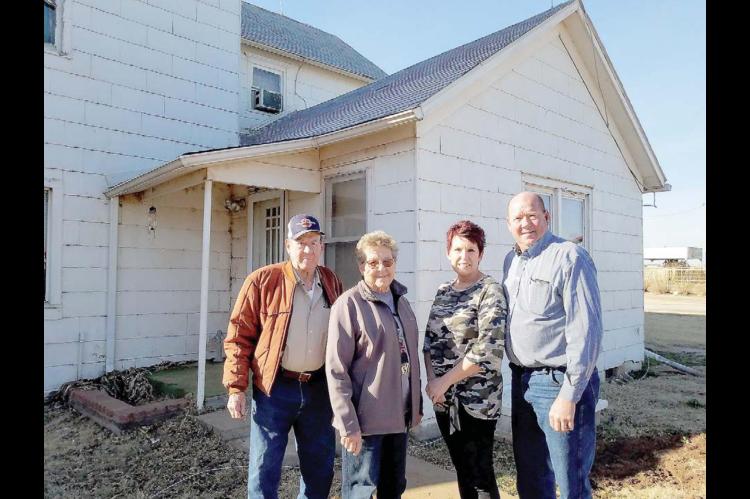
It took four tractors, two make-shift skids from electrical poles, two days, family members, helpful neighbors and one determined farm wife to make it happen.
It was 1947, Clyde and Helen Chlouber purchased the property where the “county poor farm,” also known as the Greenwood Home, was located.
Helen was determined to detach a 16-foot by 18-foot room from the home and have it added to their small home about a mile south of that location.
Although only about 10 years old at the time, their son Norman still remembers the tedious process and effort it took to move the room and attach it to their home.
“They didn’t have very big tractors in those days and it was a slow and difficult process,” he said.
They had to pull it across a sandy field with four tractors, cut the fence and pull the posts to get it to its destination a mile away, he said.
“After two days when they got it there it seemed like it took forever to get the room attached,” Norman said.
He and his older brother had to help mix and pour the concrete by hand for the foundation, he added.
The Greenwood Home and the 160 acres surrounding it was owned by Kingfisher County and provided for the needy within the county starting in 1906. Over the next 35 years, the home grew to include 21 rooms as well as outbuildings which included a dairy barn, chicken house, garage and windmill.
As the means of providing for those in need began to change, the Greenwood Home closed its doors in 1941.
The property was leased out for a few years by the county and eventually sold in 1946 to Albert Wilson. The Wilsons lived in part of the home after purchasing it and began tearing down the rest. In less than a year, they sold it to their neighbors, Clyde and Helen Chlouber.
After acquiring the property, the Chloubers continued dismantling the home, sold the salvaged materials to pay their loan and moved the room which had served as the Greenwood dining room to their home.
Recollection of the “county poor farm” is still vivid for Norman and he said the rooms were very small with only a bed, wash basin and pitcher on a dresser and towel rack. There were no indoor toilets, but an outhouse was located on the property, he added. He remembers finding an old dagger and brass knuckles at the base of the windmill and still has the brass knuckles.
In 1961, Norman married Janet Kudlac and they moved into the home which had belonged to his grandparents, Rudolph and Rosie Chlouber, only one-half mile away from his parents’ home. They raised their three children, Mike, Denise and Leigh Ann, there and have continued to live there for their entire 60-year marriage. Mike recalled how his mom would tell about his childhood, saying that he would tell her he was running away and head out through the field toward his grandparents’ place and she would call and let them know “he’s coming over.” Clyde and Helen’s place would be passed on to Mike when he married Rhonda Curtis in 1985. They raised their children, Ashley, Curtis and Dustin, in the home and have continued to live there through 36 years of marriage. They also have six grandchildren, making it five generations of Chloubers who have shared in the memories within the walls of the old home.
Mike and Rhonda have built a new home just feet away from the one that served their extended family well for over 70 years. The building, more than a century old, had to be torn down last week.
The house remained much the same as it did in 1947, when Mike’s grandparents attached the room. The original home was built in 1911 and with very few changes, Mike and Rhonda relied on a wood stove for heat and window units for cooling...for 36
“It was definitely hot in the summer and cold in the winter,” Mike said, “but it is special because we raised our family here and it has been in the family for so long.”
Stoking the fire every three or four hours and burning through many ricks of wood during the cold winter months to keep his family warm, Mike said, is one thing he won’t miss when the house is gone.
“But I definitely will miss the sight and smell of smoke rising from the chimney while doing chores around the farm,” he added.
The addition of hay bales against the outer north wall provided a little reprieve from the frigid winter winds, but sometimes it would get so cold in the house a layer of ice would form in the toilet bowls overnight, Mike said.
They were still using the Frigidaire oven that was in the house when they moved in and the same carpet which was worn almost to the boards, Rhonda added.
Even with its challenges, she said, “It is the only place we have ever lived as a family and it was a perfect place for raising our kids.”
Having salvaged some of the wooden floor from their home, the Chloubers intend to have decorative pieces created for the family as physical reminders of the love and memories created there.
Keeping the home fire burning was literally a big part of Mike’s responsibilities as head of their family. Recognizing the significance as he put the last log on the fire, he and Rhonda savored the moment and the memories within that old room.
On Jan. 2, they spent their first night in their new home and though they are looking forward to the moments and memories that lie ahead, they both agreed it was a bittersweet moment.
“That first night when we shut the lights off it was kind of sad,” Mike said.
“We were both tearyeyed when we came over and spent the first night in the new house,” Rhonda said.
“It was a special place to a lot of people.”
Mike, Rhonda, Ashley, Curtis, Dustin and Janet (Norman wasn’t able to be there) were all present to say goodbye as the old house was demolished.
“It has been bittersweet, but I’m glad we were able to be there,” daughter Ashley said.
A remnant of Kingfisher history will live on, if only in stories, photographs and memories of the Chlouber family as well as those who were touched by or found refuge in the Greenwood Home many years before.
(Some of the information in this article was taken from an article in the Nov. 17, 1996, edition of the Kingfisher Times & Free Press)