
1 minute
Early bone of constitutional contention
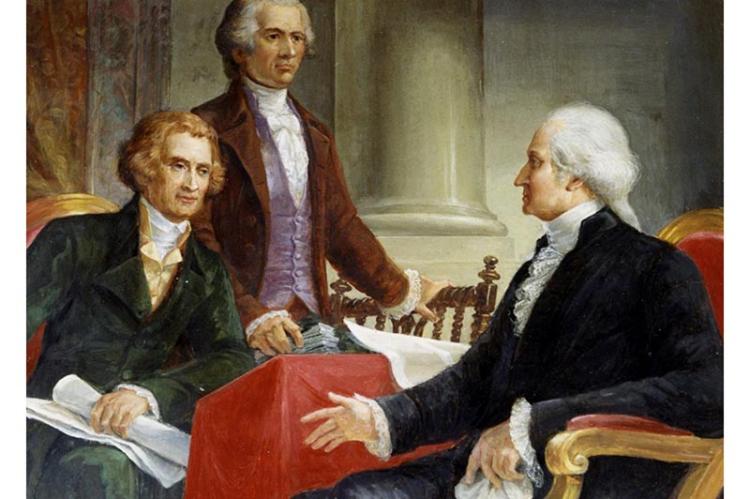
Nearly 230 years ago, before Alexander Hamilton died dueling Vice President Aaron Burr in 1804, he faced Thomas Jefferson in the political arena.
They clashed on nearly every issue, including how to use the count of every person in the nascent nation.
Their main dispute was over how the census would determine congressional representation for the states. It all came down to the math. They had very different ideas about the formula for determining representation based on population.
“Jefferson was adamant,” said Census Bureau Historian Sharon Tosi Lacey. “So was Hamilton, whose method was used in the first apportionment bill sent to President George Washington. After consulting with his Cabinet, Washington exercised the first-ever presidential veto and sent the bill back to Congress.”
In the end, the founders used a variation of Jefferson’s method, “even though it meant fewer seats for his home state of Virginia,” Lacey said.
Disagreements over the method of apportionment arose every 10 years as new territories gained statehood and states vied to keep or increase their number of congressional seats.
Several other apportionment methods were used until 1940, when Huntington-Hill/Equal Proportions became the permanent method, Lacey said.
Today, states can gain or lose U.S. House seats based on whether their population goes up or down.
Determining states’ congressional representation is just one of several important impacts of responding to the 2020 Census.