Easy Come, Easy Go?
Permian may draw some oil biz south, but company says STACK still viable
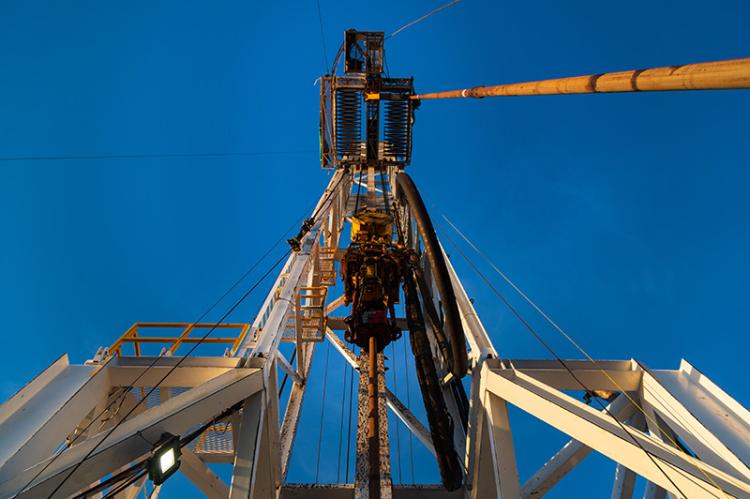
Are sluggish oil prices and declining Oklahoma rig counts signs that the once vibrant STACK oil play in Kingfisher and Canadian counties is losing its luster for major energy companies?
As with any complicated economic question, it depends on whom you ask.
“When you look at the state rig count down 40 rigs this year from January to now, that’s a big concern,” Chad Warmington, executive director of the newly rebranded Petroleum Alliance of Oklahoma (formerly OIPA-OKOGA), said last week.
“The primary culprit is the Permian Basin (in Texas), which is a really good oil and gas play, and a lot of companies with assets out there are moving their money from here.
“Permian is just a monster and that’s where they’re going from here. At the end of the day, they have a duty to their shareholders to produce as much value as they can and other areas have more value for their capital.”
However, that’s not an opinion shared by Canadian-based Encana, which purchased the assets of Newfield Exploration, one of the first major players in the STACK.
While Encana also has a presence in the Permian, the company continues to hold the largest number of acres under lease in the STACK, and expects to maintain an active presence in this area for decades to come.
“We definitely have not moved most of our capital to the Permian, we’ve just become more efficient in the Anadarko (Basin) and STACK,” Cindy Hassler, Encana’s communication director said. “Our capital budget for the Anadarko Basin is still more than $800 million.”
Since its February merger with Newfield, Encana also has been focused on increased efficiencies, which has reduced STACK well costs by $1 million per well, a 20 percent increase in returns, she said.
Those savings came from self-sourcing sand and chemicals, changing multi-well pad dimensions to improve traffic flow and safety and installing dual flow water lines to more quickly move water in and produced water out.
“Today, linking the number of rigs to our production results can be misleading,” Hassler said. “Although we only have five rigs running today in STACK, with the big efficiency gains we are realizing in this asset, we will drill and complete nearly as many wells (approximately 100) as we did when we were running 11 rigs. Our returns in STACK are competitive with Permian.”
She added that Encana’s increased efficiency did not come through a reduction in workforce; the company still has new job openings.
Warmington said STACK’s multiple formations, one of its initial “key selling points” are really thin compared to Permian, which he said allows companies to drill more wells that are more productive in the Texas formation.
Hassler agrees that the Permian’s attractions are undeniable.
“It is true that the Permian has multiple, stacked distinct horizons to exploit, while the Anadarko Basin has only two,” Hassler said. “And it is true that the Permian has some of the world’s thickest deposits of rocks and holds the largest crude oil fields in the U.S.”
“In fact,it has twice the oil cut of the Anadarko Basin,” Hassler added. “But none of these things have anything to do with how much it costs to drill a well.
“The cost is the cost and Anadarko/STACK well costs for Encana are competitive with the Permian.”
Encana maximizes its STACK production through a development process it calls a cube, so named because it uses three-dimensional modeling to space wells both vertically and horizontally.
“From the air, the development looks like a cube or a box, rather than a row,” she said. “We can bring on a multi-well pad in about 90 days versus the 180 days that it took New-field via row development.”
Hassler said Devon, Continental and Marathon also are still active in the STACK and Cimarex has acreage but no rigs running. Warmington noted that smaller companies also are still active here.
“An EIA (Energy Information Administration) report shows that Anadarko (basin) is still a heavyweight among U.S. shale regions in terms of oil and natural gas production,” Hassler said. “For Encana, this will be a multi-rig program for decades to come.”
“Oklahoma is still a good place for oil and gas. We’ve got great infrastructure and a tremendous workforce and there’s going to be room for us attracting investment, just not at the same pace,” Warmington said.