
Expanding Access
New $24.2 million CARES grant to provide more broadband in rural areas
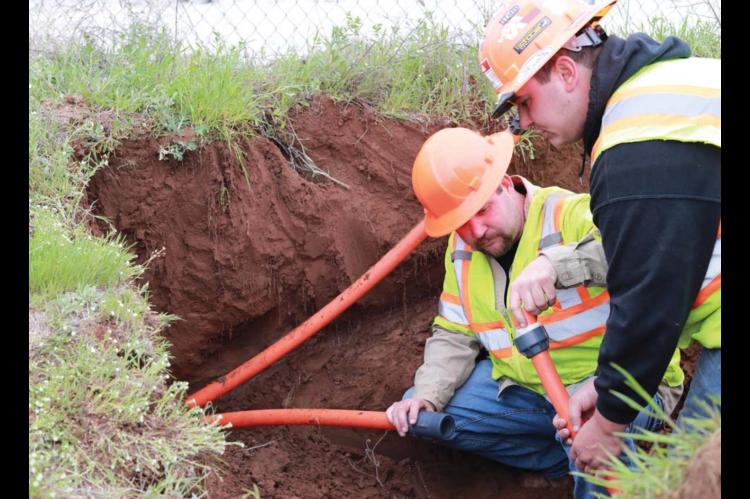
Pioneer Telephone Cooperative is awaiting completion of state environmental reviews to begin putting to work the $24.2 million CARES Act grant it was awarded to expand broadband access, CEO Richard Ruhl said.
Pioneer will use the grant, plus an additional $8 million match from its own funds, to deploy a fiber-to-the-premises (FTTP) network to connect 4,480 people, 595 farms, 44 businesses and two fire stations to highspeed broadband internet in Blaine, Dewey, Ellis and Kingfisher counties.
The cooperative was one of 11 applicants competing for an additional $100 million added by the Coronavirus Aid, Relief and Economic Securities Act to the Broadband Re-Connect Program administered by the U.S. Department of Agriculture.
The additional $100 million allowed the USDA to speed up the ReConnect grant award process to meet the growing demand for broadband access for distance learning and working from home during the pandemic, Ruhl said.
“With the pandemic, the surge is ubiquitous across the country. Everyone is struggling,” Ruhl said.
Pioneer has seen a 25-30% increase in broadband usage and demand since the start of the pandemic, he said.
“So Congress initiated this additional $100 million under the CARES Act and we were awarded 25% of that total.”
The funds are in addition to about
$400 million Pioneer has already committed to fiber optic buildout through other federal grant programs which are funding projects currently under way in and around Kingfisher, as well as elsewhere in the cooperative’s coverage area, Ruhl said.
Additional funding is good news because installation of fiber optic lines is expensive – about $17,000-20,000 per mile, Ruhl said.
And in rural areas where farms, households and other premises are sparsely situated, that cost averages out to $17,000 per location.
“It’s expensive and it takes a long time,” Ruhl said. “If we were to do it strictly on rate of return (financed solely through monthly customer fees) it would take a really long time.”
Under the USDA grant, Pioneer has five years to complete the additional buildout, which extends over an 826-square-mile area.
Ruhl said he anticipates about 60 days to complete the environmental review before project planning can begin.
“Right now, I don’t know where it will start,” he said. “We’re trying to coordinate with our other fiber optic project so that if we already have contractors working in an area, we can utilize them to start this project also, with USDA approval.”
“I’m thrilled this grant will help meet some of these needs for greater broadband access that have developed during the pandemic,” House Majority Leader Mike Sanders, R-Kingfisher, said.
“I want to extend my congratulations to Pioneer Telephone for being the recipient of these funds. “They have proven to be good stewards of the public’s trust, and I know they will make every effort to make sure our hard-working rural residents and business owners can conduct business and stay connected to needed services.”
Sanders, who formerly served as deputy chief of staff for USDA Rural Development under President George W. Bush, said the agency helps create jobs and expand economic opportunities in rural areas by providing loans and grants that support infrastructure improvements, business development, housing, community facilities such as schools, public safety and health care; and high-speed internet access in rural areas.
Another $5.4 million grant also was awarded last month to Cimarron Telephone Company to deploy an FTTP network to connect 746 people, 107 farms and three businesses to highspeed broadband internet in Pawnee and Osage counties.
More ReConnect grants are expected to be announced this week for rural Tennessee, according to a USDA news release issued Monday.