
Mission Impossible
State’s system thwarts good gov’t
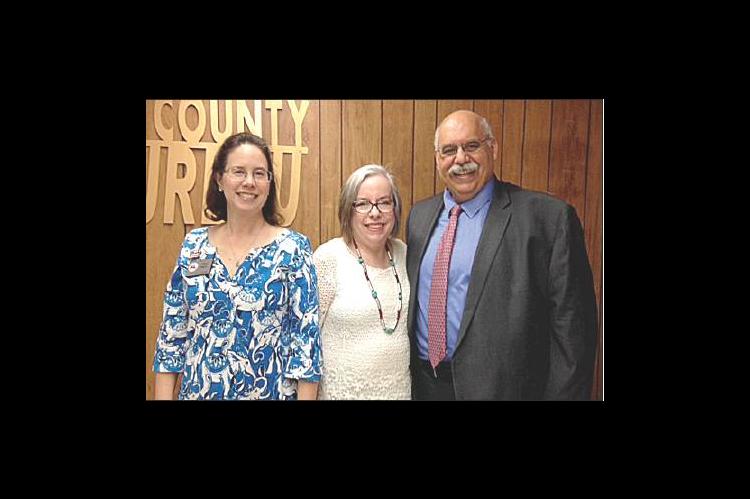
If you’re frustrated that votes you cast in state elections don’t result in your intended outcomes, don’t blame elected officials, a state constitutional scholar said Wednesday.
“It’s a dysfunctional system with roots in our state constitution,” Andrew Spiropoulos, Oklahoma City University law professor said at the monthly Kingfisher County Republican Women luncheon.
“Oklahoma voters have sound views, but very seldom do those views get implemented.
“It’s the structure of our state government that is so poorly designed it prevents good government from being implemented.”
Spiropoulos was referring to the state constitutional requirement that all members of the executive branch of government – governor, lieutenant governor, attorney general, superintendent of public instruction, attorney general, auditor and inspector, insurance commissioner and labor commissioner – are all independently elected.
“That means the governor has no real control over the executive department,” he said. “For example, the biggest chunk of the state budget goes to the Department of Education and yet the governor has no control over the day-to-day operations of that department.”
He noted that former Gov. Mary Fallin’s attempts to even get an accounting of what percentage of tax dollars appropriated to education are spent in the classroom fell on deaf ears.
“She was never given that information and she had absolutely no authority to force the issue,” he said.
He also noted that Fallin never held a single cabinet meeting during her term.
“I don’t know why, but I suspect part of the reason was that she saw them as a waste of time,” he said.
Despite campaign promises and the best of intentions, a governor can’t affect real change unless he or she has the agreement of the other elected state officials, he said.
Spiropoulos contrasted the Oklahoma system with the federal system, where the president has the authority to hire and fire all his cabinet members.
“When you do that, you can affect real change,” he said.
Spiropoulos said the Oklahoma constitution, written almost entirely by Gov. Bill Murray in 1907, reflects the state’s populist sentiment at the time and the fear of concentrating too much power in the hands of the governor.
He said the same populist sentiment is reflected in the state supreme court, which required that each of the nine justices be appointed from nine different regions of the state.
However, legislation which goes into effect next year reduces the number of judicial districts to five, identical to the five state Congressional districts, with four other justices appointed “at large.”
“The U.S. Supreme Court is not at all representative, nor is it intended to be,” he said. “The intent is to appoint the best legal minds in the country without regard to where they live.”
He noted that Gov. Kevin Stitt campaigned on changing the system for appointment of governing boards of various agencies and has managed to expand his executive authority to the extent that the constitution and Legislature will allow.
“We finally have a governor who understood and ran on changing this structure,” he said. “For five major agencies – corrections, transportation, health care, mental health and juvenile justice, the governor can hire and fire agency heads and appoint five of nine of the governing board members.”
So while top state officials remain independent, the governor and legislature now have a greater influence on policies proposed and implemented by each of the boards.