
Multidisciplinary approach expands beyond child abuse
The opening voiceover of Law & Order SUV has it right – some crimes are especially heinous.
That’s why Kingfi sher County adopted a multidisciplinary approach a decade ago to combat crimes against children.
The result is the Multidisciplinary Child Abuse Response Team, comprised of law enforcement, the district attorney’s offi ce, social services and medical and mental health professionals who focus not only on successfully prosecuting offenders but also wrapping vulnerable victims in protective services to help them regain physical and emotional equilibrium.
“The creation of MCART really revolutionized the way we respond to and investigate cases involving children,” Kingfi sher Police Chief Dennis Baker said.
Not only does the team approach streamline investigations by eliminating multiple victim interviews and examinations by different agencies, but it also “identifies any gaps in services that could be beneficial to child victims,’ Baker said.
The team also has worked to make more victims services available locally, including forensic child abuse physical examinations by local nurse practitioner Rachel Cameron and trained child interview specialists in the police department and sheriff’s offi ce.
“We are predominantly able to provide for victims now without the necessity of traveling to and from service providers out of town,” Baker said.
Over the last two years, the team has been working to expand the approach to cover two other types of crime that also leave victims especially traumatized – domestic violence and sexual assault.
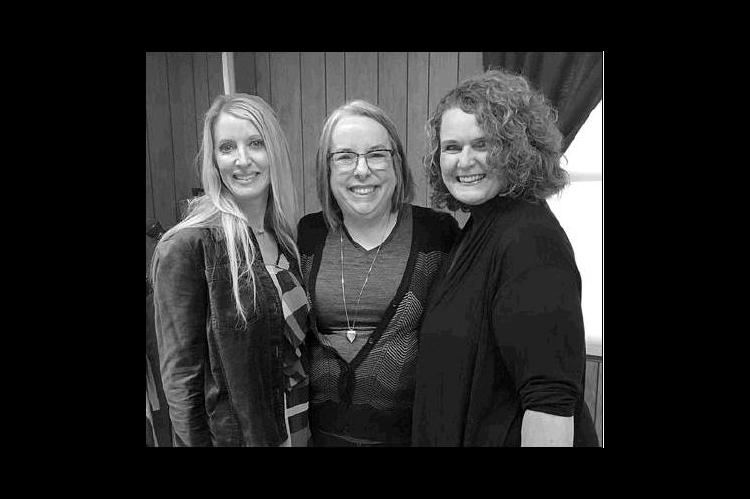
Task force members Brittany Gassner, victim-witness coordinator at the district attorney’s office, and Cameron discussed those plans at a Kingfisher County Republican Women lunch meeting last week.
“About 12 percent of the felony cases filed in Kingfi sher County from Jan. 1 to Nov. 20 (13 of 111 cases) have involved either sexual assault or domestic violence,” Gassner said. “Another 14 cases of domestic assault were filed as misdemeanors during that same time period.”
The distinction between felony and misdemeanor charges lies in the severity of the injuries involved and-or whether it is the perpetrator’s fi rst offense.
“It’s a serious problem here,” Gassner said.
Cameron has expanded her forensic examination training to be certified as a Sexual Assault Nurse Examiner and is on call 24/7 to conduct those exams in her clinic.
“We collect evidence according to OSBI (Oklahoma State Bureau of Investigation) protocol and maintain a chain of custody in handing it over to OSBI for testing so that it can be used in court,” Cameron said.
“Having this service available locally is invaluable to the successful investigation and prosecution of these crimes,” Baker said. “It’s been a personal goal of mine as a member of the response team and I’m glad to see it in place.”
At the KCRW meeting, Gassner described the typical cycle of domestic violence, which starts with relative calm, followed by building tensions that eventually erupt in violence, followed by apologies, expressions of remorse until tensions build again to the breaking point.
The average victim sustains multiple episodes of abuse before reporting the crime, seeking help or attempting to leave.
As with child abuse, the victims of domestic abuse or sexual assault are often especially vulnerable and often require protection and services beyond what is typically available through the normal justice process, Gassner said.
In fact, the criminal justice process itself often compounds the trauma for victims already fearful of repercussions from their alleged abusers.
And in addition to the immediate physical effects of the abuse, victims may suffer from post traumatic stress disorder, lack housing or economic resources and require advocacy services.
In her professional capacity as victim advocate, Gassner works to address some of those needs.
“In one case, a woman had a disabled adult son that she was caring for and a beloved dog and wouldn’t leave her abusive situation unless she could take both of them with her,” Gassner said. “I spent hours on the phone finding a domestic violence shelter that would allow her to bring her adult son and her dog.”
But Gassner can’t address every advocacy need alone.
That’s why MCART is broadening its resource team to include nonprofessional volunteers to be trained as assault victim advocates.
“These volunteers will do everything from accompany victims to examinations and court hearings to supporting them at protective order hearings and helping them find resources,” Gassner said.
Volunteers will be accepted beginning in January and will be trained through a program offered through the state Attorney General’s Office, Cameron said.
“We are working on setting up the training locally sometime after the first of the year and we’ll be asking anyone interested in volunteering to contact us,” she said.
Baker told the Times & Free Press that the successful and proven multidisciplinary model has the right ingredients to be equally effective in cases of domestic violence and sexual assualt.
“Providing timely and effective services to victims, as nonintrusively as possible, across all disciplines and producing the best cases that we can for potential prosecution of offenders has always been the goal of the teams,” Baker said.
“As we continue to move forward, I can only see us becoming more and more effective in those efforts.”