
Navigating the road of special needs care
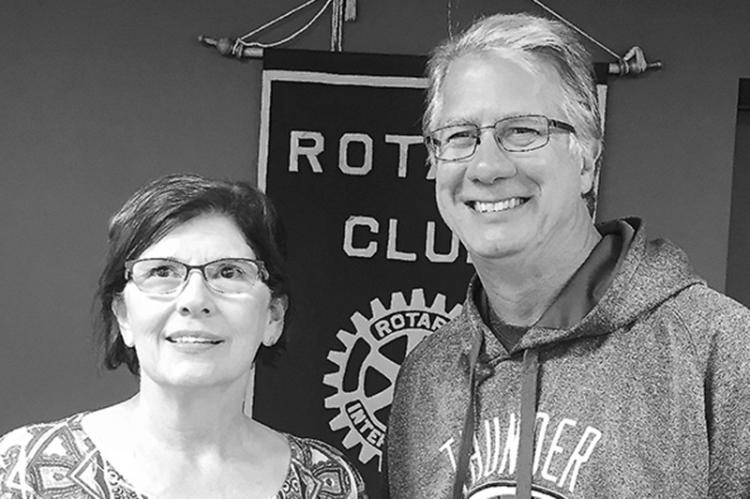
Copeland discusses position as county coordinator for Sooner SUCCESS with Rotary
When then six-month-old Ashley was diagnosed 32 years ago with a disabling genetic disorder, Jim and Lisa Copeland had to navigate the frustrating, overwhelming and sometimes terrifying world of special needs parenting without a road map.
That’s why when Lisa had the chance 17 years ago to sign on with a new agency designed to help families in her situation, she jumped at the chance.
Copeland works as the county coordinator for Sooner SUCCESS, a University of Oklahoma Health Sciences Center program dedicated to promoting a comprehensive, coordinated system of health, social and educational services for Oklahoma children with special healthcare needs.
She shared details of her job at a recent lunch meeting of the Kingfi sher Rotary Club.
The younger of the Copeland’s two daughters, Ashley started experiencing infantile spasms shortly after receiving her four-month vaccines and was diagnosed at six months with tuberous sclerosis, a rare condition that causes a collection of symptoms, including developmental delays, intellectual disability and seizures.
Being thrown into the labyrinth of fi nding medical care, coordinating therapy, choosing among treatment options, dealing with fi nancial burdens and fi ghting for services once Ashley reached school age, Copeland has a unique empathy for other parents in the same situation.
“I’ve worked with lots of families since I started in 2002 and still have contact with a lot of the early ones,” she said. “I’ve lived it and have a true compassion for supporting them.”
Part of the mission of Sooner SUCCESS is not only to provide support to special needs parents, but to develop a local infrastructure to bring that support to their communities.
One way the program does that is by developing local coalition groups of public and private providers and services to promote a comprehensive and coordinated system of care.
Copeland had a leg up in that regard since the Kingfisher Community Collaborative was already in place when Sooner SUCCESS was formed.
Her agency’s goals meshed seamlessly with that group that had already brought all the players to the table to promote a wide variety of services and programs dedicated to the county’s health and wellness, with a special emphasis on children.
Copeland has served as chairman of the collaborative for a number of years.
One service that Copeland provides is accompanying parents to IEP meetings with school representatives.
By federal law, schools are required to develop Individual Education Plans (IEPs) for special needs students, in coordination with their parents.
“That is a scary thing sitting in a meeting with a panel of educators and therapists telling you about your child and all the things she can’t do. It can be very intimidating,” she said. “I will and have gone into those meetings with families when they request it.”
In addition to helping special needs children, Sooner SUCCESS also offers programs to support and nurture their siblings and other family members.
(In addition to her parents, Ashley has the love and support of older sister Allison Coughlan and Allison’s daughters, who have a close relationship with “Aunt.”)
As the Copelands know, parents’ responsibility for 24/7 care of a special needs child frequently does not end at high school graduation.
And Lisa doesn’t see her supportive relationship with other families ending at that point either.
“I just had a conversation with a family whose child is older and health is failing,” she said. “As daunting as it is, we talked about that child’s possible death.
“And we both cried.”
Families can request help from Sooner SUCCESS directly, but Copeland also receives referrals from doctors, the Department of Human Services, Redrock Behavioral Health and other sources.
She invites anyone with questions to contact her directly.
“I just want to take some pressure off those families,” she said. “I understand it because I live it. The struggles are very real.”