
Nurses of a different sort
Two Kingfisher women do their part to conserve local butterfly population
“Happiness is like a butterfly, the more you chase it, the more it will elude, but if you turn your attention to other things, it will come and sit softly on your shoulder.”
– Henry David Thoreau
As butterflies effortlessly flutter about and slowly wave their colorful and intricately detailed wings back and forth, nature provides a pause, allowing us to be drawn into the butterfly’s beauty and tranquility, if only for a moment.
On a mission to ensure future generations can enjoy the beauty of a butterfly, longtime friends Nancy Copeland and Linda Schemmer are growing the plants butterflies need to survive and helping protect them from predators.
Providing care, nurturing, and restoring health come natural to the pair.
Schemmer and Copeland are both retired nurses, and between them, spent over 70 years taking care of patients at the hospital in Kingfisher.
During their careers, Copeland also put her nursing skills to use at a local medical clinic and Schemmer taught nursing at Chisholm Trail Technology Center.
In retirement, they spend much of their time caring for a smaller version of God’s creation.
Schemmer has been involved in butterfly conservation for over 20 years and now Copeland has “caught the bug.”
Butterflies need specific plants to survive and much of their habitat is being destroyed by widespread herbicide use and large scale construction, Schemmer said.
Although Copeland already grows a large backyard full of flowers, she said she only recently started learning more about butterflies and their specific needs. With Schemmer’s mentoring, she is learning what types of plants different butterflies like and hoping to include as many as possible as she builds her butterfly garden.
“I want to get every kind of plant I can, so I can have all kinds of butterflies next year,” Copeland said.
With plants like fennel, tropical butterfly weed, rue, salvia, passion vine, firecracker bushes, gardenia, snapdragons, clematis and petunias already attracting butterflies, Copeland has plans to keep adding to the variety.
From covering her back fence with crossvine, adding more milkweed, perennials, and just about anything that will attract more butterflies (and hummingbirds), Copeland said, with excitement, she is all in.
“I can watch the butterflies for hours,” she said.
“It is such a miracle how they start out, then turn into a butterfly.”
Butterflies are very specific on what they will lay their eggs on and monarchs only lay their eggs on milkweed, Schemmer said.
Black swallowtail, Oklahoma’s state butterfly, lay their eggs on fennel, as well as dill, parsley and rue, she said.
Other butterflies, such as gulf fritillary prefer passion vine and buckeyes can be found on snapdragons, fog fruit and plantain, Schemmer added.
Once deposited on the plant, the egg turns into a caterpillar with a voracious appetite consuming the leaves of their host plant before they form a chrysalis and reemerge as a beautiful butterfly…unless a wasp, spider, bird, or other predator destroys the egg or caterpillar before the metamorphosis process can be completed, Schemmer said.
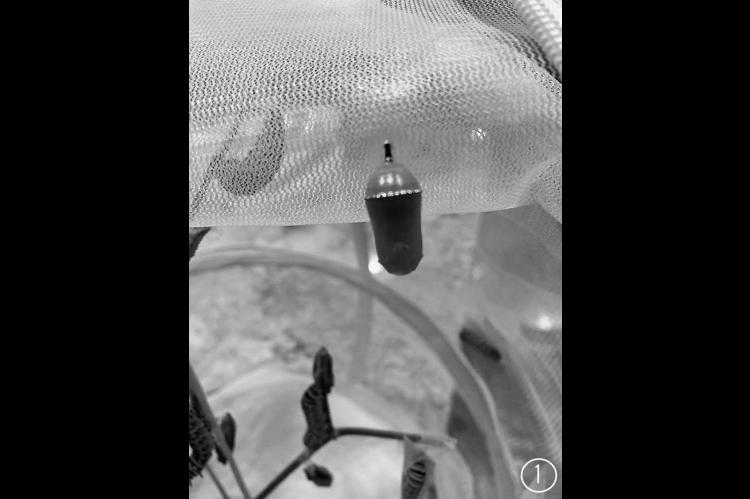
To help prevent that from occurring, Copeland said, she searches her plants and collects the caterpillars while they are small, then transfers them to a protected habitat and provides their specific food source until they form a chrysalis.
Depending on the species, time of year and conditions, the butterflies will emerge from the chrysalis in about 10-14 days and after their wings have dried, Copeland said, she returns them to her flower garden.
“It is so exciting and they’re so beautiful to put them in your hand and release them,” she said. This summer, Copeland
This summer, Copeland said she has raised and released approximately 200 butterflies, primarily black swallowtails, but also gulf fritillaries, monarchs and buckeyes.
Not only do butterflies add a special touch of beauty to nature, Schemmer said, they are important contributors to the ecosystem and their presence or absence can indicate how healthy the local environment is.
Over the years, Schemmer has contributed to the research and preservation of butterflies by participating in tagging of monarchs to track their migration, as well as documenting different types of butterflies found in Kingfisher County.
One of the monarchs she tagged traveled 1,141 miles from Kingfisher to Mexico, she said.
Monarchs are widely known for traveling long distances, up to 3,000 miles, during fall migration to the Sierra Madre mountains of Mexico, Schemmer said. Oklahoma is often one of the main areas the monarchs will travel through, she added. They will typically travel
They will typically travel on the wind as cold fronts make their way south in the fall and return northward as the weather begins to warm in the spring, she said.
Preserving and planting more habitat is important for the survival of butterfly species, Schemmer said. Planting varieties of nectar producing plants will attract not only butterflies, but hummingbirds as well, like salvia, butterfly weed, lantana, firecracker plants, bee balm, flocks and many others, she added.
Doing her part to protect the butterflies and also taking advantage of the opportunity to enjoy them, Copeland said, “I love watching them and want to provide more plants for the butterflies and try to save all I can.” “If you plant it, they will
“If you plant it, they will come,” Schemmer said, and added it may take a couple of years, but they will find it.
The friends agree that butterfly gardening takes effort, but is very rewarding.
“Most importantly, we want to have butterflies and hummingbirds for our grandkids and if we don’t help save them now, they may not be around,” Schemmer said.
In agreement, Copeland added, “I sit and watch the butterflies and hummingbirds for hours and I’m happy…happy just sitting there.”