
Purify your air with a Pothos
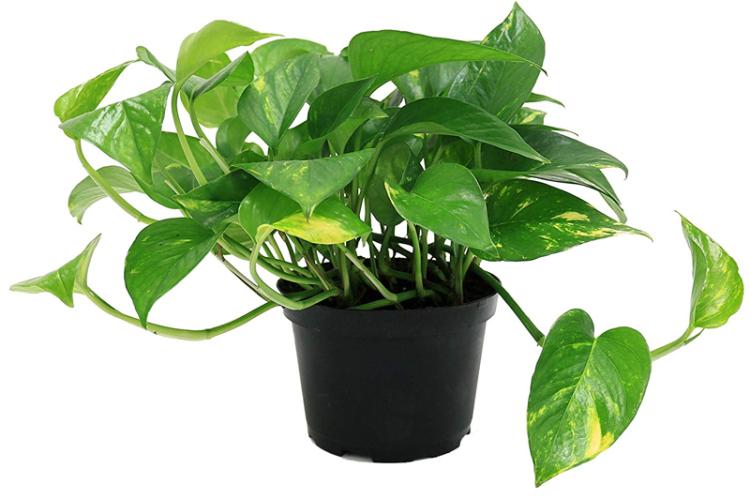
Epipremnum aureum is a trailing, leafy vine that can reach lengths of up to 40 feet in tropical jungles. Its genus name is derived from the Greek words epi (meaning upon) and premnon (meaning a trunk) in reference to its growing on tree trunks.
Indoors, the pothos plant usually confines itself to about six to 10 feet. Its leaves are bright and waxy with a noteworthy pointed heart shape, and are often green or variegated in white, yellow, or pale green. It is rare for them to flower or produce berries, especially indoors, but certain varietals can have tiny, petal-less white flowers that feature small berries.
Also called devil’s ivy, pothos can be grown in hanging baskets or as a potted plant on a desk. They are excellent at helping to purify the air and tolerant of fluorescent light, making them a popular choice for office environments. These plants can also help cleanse the air when grown in your home or office, as well.
Most of us, or at least those of us without a green thumb, prefer sturdy house plants that require minimal attention. Well, we’re in luck. The pothos plant is attractive as well as notoriously hardy, earning a reputation as the easiest houseplant to grow. While they are native to the understory forest in the Solomon Islands, pothos are able to adapt to a wide range of growing conditions outside of their natural tropical habitat.
Not only can a pothos plant enliven your space with color and texture, pothos rank highly on the list of plants that help purify the air. Additionally, they increase humidity and replace carbon dioxide with oxygen.
Even though pothos are ridiculously easy to care for, we’ll give you a few tips to keep your plant healthy and happy. Like all plants, it requires light, water, and proper air circulation to grow.
Light: While pothos do well in a variety of light conditions and can even tolerate low light, moderate indoor light is ideal. Outdoors they can be grown in shade to partial shade. Wherever you decide to display your pothos, just be sure to avoid direct sunlight. A highly variegated pothos may lose its variegation when placed in low-light conditions. Since only the green parts of the leaves can make energy, the leaves will compensate for the lack of light by turning more green. Pale leaves that turn yellowish in color could indicate that your plant is getting too much light.
Water: Keep soil moist, but be careful not to overwater. Easier said than done, right? Pothos do best when their soil is allowed to dry out between waterings. To achieve this watering technique allow only the top two inches to dry being sure that the roots are still moist. If the leaves are wilting or turning brown, you should water the plant more often. If the leaves are yellow, you may be watering it too much. Excessive watering may cause root rot. Do not allow your pothos to stand in water, unless it is a cutting started in water. Pothos can grow in water as well as soil, but they have a hard time switching from one growing medium to the other. A pothos plant started in soil will thrive best if continued to grow in soil, and vice versa.
Temperatures: Pothos can tolerate moderate temperatures ranging from 55 – 85°F, however they are tropical plants and so prefer high humidity and temperatures of 70 – 90°F.