
Remembering Ray West
SWISHER’S SUITE
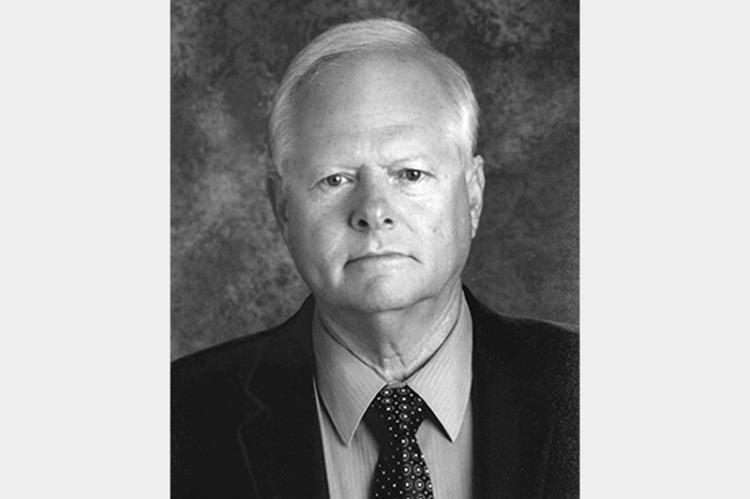
(Ed. note: A story on Ray West and his immense impact on a number of people during his 45-year career appeared in our Wednesday, Aug. 14, edition. This is a look at Ray through Managing Editor Michael Swisher’s eyes as well as an extended version of what some others had to say about the legendary Okarche coach who passed away last Sunday morning.)
February 2, 2000.
That was the day I truly gained Ray West’s respect.
Don’t get me wrong. Ray had already treated me with the utmost respect to that point.
Since the day I started as a sports writer at the Kingfisher Times & Free Press in August 1997, he welcomed me to the beat with open arms.
He always called in his scores. Gave me great quotes. Invited me to his practices. Even invited me to come to Okarche games, which was, you know, the thing I was paid to do.
And every time I showed up, whether at a practice or a game, he acted as if I was doing his team and Okarche a great service with my presence and he always had the same greeting:
“Well HI, Michael.”
Yeah, he called me Michael. One of the few to do so.
It was that way from the start. I was green. Probably not very good at my job yet, but Ray treated me like I was from The Oklahoman or the Tulsa World or even Sports Illustrated.
He was great and we had a great relationship.
But on Wednesday, Feb. 2, 2000, it was solidified.
That’s because Ray got as mad as I’d ever seen him to that point – or any time after – just one night before.
In a home game against a talented Minco team, Okarche was defeated 64-63 when the Bulldogs’ Scott Shinn knocked down a 12-foot jumper as time expired.
Ray lost 391 games in his career and hated every one of them, but this one lit him up.
Just moments before the buzzer-beater, Ray, his team, the Okarche fans and probably most of the visitors from Minco thought the game was over and the Warriors had won 63-62.
There had been a mad dash for a loose ball that went out of bounds as the buzzer sounded.
Game over.
Okarche wins.
However, after a conference, the officials put a 1 second back on the clock.
That set up Shinn’s game winner.
Was it the right call to put time back on the clock? I don’t recall feeling one way or another about it. It was close.
Was it a call I expected a home team to get in its favor? Probably so.
Ray, on the other hand, wasn’t straddling the fence. He was upset.
Beyond upset, actually.
He thought his players had been railroaded at home and he let it be known to me and anyone else in his office who would listen.
Ray commenced to go on a four-letter-word tirade for the ages.
He said some other things, too. I took some handwritten notes, made some mental ones and I headed back to Kingfisher to write my story for the next day’s edition.
Back in my early years, we printed first thing on Wednesday and Saturday mornings in El Reno.
It was my job then to drive the plates (newspaper term) to the printer and then drive the printed papers back to Kingfisher.
As you well know, Okarche sits between El Reno and Kingfisher. So, on my way back, I dropped papers off at the two convenience stores in Okarche.
By the time I got back to Kingfisher - and before I could get the papers unloaded - Ray had called and was on hold for me.
“Michael, I just wanted to tell you what a great story that was. I said a lot of stuff last night, but you didn’t go down that road,” he said. “I can’t tell you how much that means to me.”
It was obvious he’d been up all night (firstly because it was basketball season and he was up all night anyway) worrying about how much of what he said was going to wind up in print.
My lede probably didn’t help that anxiety:
“Forgive Ray West for being a little upset.”
But that was the lone reference to some of the words he introduced me to the night before. What I did quote him on were the positives:
“We’re better than we were two weeks ago,” he said. “I feel good about that.”
There was also the performance of Jarrod Mueggenborg, who was in the midst of an All-State senior season. He scored 31 points and had 19 rebounds, nine of them on the offensive end.
“Does he show up for big games or what?” West asked me afterward.
Those were the quotes I pulled from Ray’s 10-minute performance. That’s all I needed.
He blew off some steam and I allowed him to do that without burning him - needlessly - in my story.
So he made sure to let me know about it the next day after he, no doubt anxiously, read the story.
And Ray did that often. He always made sure to compliment a good story or just thank me for “doing what you do for the kids.”
I would venture to guess in his 45-year career, nobody covered more of his games in person than I did.
It’s probably not close.
Ofhis25yearsatOkarche, I’ve been covering sports either at the newspaper, for CoachesAid or for Skordle for 22 of those years.
So we had a history. And we had a relationship.
We had a friendship.
I cared deeply for Ray because he was one of “my coaches,” but it also went beyond that.
As the story in Wednesday’s edition stated, Ray cared about people in his world. He cared about their families. He asked about them. Greeted them. Showered them with compliments.
On the bench, he was a scowling, screaming, shirt-untucked ball of intensity.
But off the court, he was as gentle and caring a man as there was.
That’s not hyperbole.
And when you have 22 years of that kind of relationship, you take the news of his illness hard.
I wanted so badly to go see Ray, but I knew that as quietly as his sickness had been kept, that I needed to keep my distance.
When I caught word of his death, it put a dark cloud over me. Probably is still there.
I talked to tons of people when I wrote the story for Wednesday’s edition.
There were infinitely more I could have - and should have - talked to.
Guys like Bob Barnett and David Glover, former superintendents at Okarche.
Scott Hines and Garrett Mantle and Danny Maddox, just a few of his former players who went on to their own coaching successes.
Allen Tune, like Eric Smith, was a student-assistant under Ray and went on to win a state championship as a coach.
The list of former Okarche players I could have reached out to is endless.
Same goes for coaches in Oklahoma who have talked basketball and scouting reports with Ray, but had no other connection beyond maybe attending his summer camps.
But we only have so much space in the newspaper, so I kept it somewhat limited.
The story was still too long for our space and our senior editor was grasping for space to fit it all in.
So, I pulled some photos I took of Kingfisher and Hennessey football practices and that provided us the room we needed.
In my mind, I’d cut it down enough as it was.
I had to cut it down because the people I DID reach out to had a lot to say.
The quotes in the story were just small tidbits of what many sent me via text, email or in phone calls.
So I’m going to offer up just a couple more thoughts and memories of my own, then I’m going to share more of what those who I talked to had to say:
• Ray deserved to win a state championship. He got close or was good enough with teams at both Cordell and Okarche.
There was the six-overtime loss to Wright City in the 1984 state quarterfinals while at Cordell, which is a still a record for extra periods.
He got to the finals twice at Okarche, but the breaks didn’t go his way.
All coaches say you have to be good AND lucky to win it. That holds true, unless you’re just that much better than everyone else.
Sometimes Ray was good. Sometimes he was lucky. He just was never fortunate enough to get both at the same time at the right time.
• Some of my best memories of being a reporter were going to Ray’s office after his home games.
His parents would unfailingly bring him food to eat - packed neatly in an ice chest - because they knew the end of the game was only the beginning of his night (again, see story linked above for reference).
They usually brought sandwiches. After his heart issues in 2006, he started being more health-conscious, so the bread was replaced by lettuce (he was ahead of the curve on that one). On special nights, Scott and Debbie Winters brought in ribs.
But those were the best times. We’d sit, eat and talk basketball. We’d talk about his game, Aaron’s game (before Aaron joined him at Okarche), other county teams, other teams battling for top-eight position in his class.
I needed to be back at the office writing, but I didn’t care. Too much was to be gained by sitting in there with Ray and soaking in the knowledge (and free food).
Those are cherished, cherished memories.
• When Mike Dantoni took over as the Phoenix Suns head coach in the mid-2000s, they had some of the best offensive teams of the decade. Dantoni was thought of as a revolutionary basketball offensive mind.
Ray loved what the Suns were doing and was someone ALWAYS trying to find a way to make his teams better.
So what did he do? He called up the Phoenix Suns office and I’ll be damned if he didn’t wind up on the phone with Dantoni.
The head coach of one of the hottest teams in the NBA was breaking down his offense with the coach of a Class A boys basketball team in the middle of Oklahoma. That was Crazy Ray.
• Ray never said “I” or “me” when talking about Okarche. It was always “we” or “the kids” or “the guys” or “the team.”
He ALWAYS told me to “make it about the kids” even if it was a game where he won for the 500th, 600th, 700th or 800th time.
I think that mindset was what drove him to keep his illness quiet as long as he did. He didn’t want it to be about him, as it inevitably would have been. He didn’t want the focus to be on Ray.
• Ray always wanted other people to be recognized. He’d give me as many stats as possible to get as many names in the story.
He’d try to give me his JV scores (sorry, Ray, I still don’t have the space).
He gave out tons of trophies and awards and shirts at his camps.
He took clippings from every newspaper story about his team during the season, put them in a book form, had them printed and gave them to each of his players at the end of the year.
He wanted them to share in the memories as well.
• Ray was a TERRIBLE loser. That’s part of what made him a winner. He hated losing.
He worked so hard to put his team in a position to win before and during the game that it ate him up to not see that victory through.
He took some losses harder than others. His handshakes with opposing coaches after losses weren’t always overly cordial.
But, as Cashion’s John Hardaway expressed in Wednesday’s article, there almost always was a text or phone call after the fact.
There are some coaches out there that probably don’t like Ray (I assume most still respect him).
I can tell you there are some out there that not even Ray cared for. He swore they taught their kids to play dirty (I’m taking those names with me to my own grave).
I don’t know if any or all of those relationships were repaired eventually, but I know that Ray didn’t take the losses well. Losing drove him to work even harder.
(Ed. note: A similar version of this column was published online last Wednesday. Since then, one of the coaches I had in mind reached out to me and said he sent Ray a letter not long before he passed and that he knows the letter was read to Ray. That was one relationship I had hoped was healed and no doubt that letter made that happen. Also, since that story was published, Cashion football coach - and former boys basketball coach - Lynn Shackelford sent me an anecdote that I will include below.)
• Ray was so happy for me when he found out I was getting married a couple years ago. Maybe he’d lost hope, but for whatever reason, he acted so happy for me and continued to gush over my bride. (No doubt he knew she was a lucky lady who had out-kicked her coverage when she landed me.)
• I got to see Ray with his elementary P.E. kids a few times the last several years. Man was he great with them.
• Before HUDL, Ray would drive to the ends of the earth to get game film. His dad would do the same for him...and even for Cherie Myers. His road trips to collect VHS tapes were legendary. He never could have enough film to watch and he’d go anywhere he had to in order to get it.
• RAY WEST COULD SHOOT A BASKETBALL!!! I got to one of Okarche’s practices several years ago just after it ended and, like most days, players were sticking around to get in some extra shots.
One of them challenged Ray to a 3-point contest. I’d seen Ray coach. I’d never seen him touch a basketball.
On that day, I was amazed at his form and his inability to miss a shot. He torched his player in that contest and gained an even larger respect from yours truly.
• Ray only hired state tournament officials. It was his job to line up officials for home games and Ray was very proud of the fact he only hired officials who had been selected to call state tournament games.
If teams came into Okarche and got beat, which they normally did, he didn’t want them to be able to say it was because of poor officiating.
Several years ago, I watched an official “T-up” Ray at one of his home games. I’d seen this referee call numerous big games all over the state.
Afterward, Ray was obviously upset and said, “I really like him. He’s a good one, but I can’t ever have him back. If you ‘T’ me up at home, I can’t have you back. I hate it, but I have to do it.”
I never saw that official at another Okarche game. Come to think of it, I don’t know if I’ve ever seen him call a game since.
Hmmmmm..........
• Sundays at On the Border. When teams make the state tournament, coaches gather at State Fair Arena the Sunday before to go over brackets and other info with the OSSAA. I generally attended these meetings.
If the Okarche boys made it, it was Ray’s tradition to eat at On the Border after the meeting. I got invited to that as well. Ray and I, apparently, ate a lot of food together.
• Some of the hardest losses were those at the state tournament when the ultimate goal was actually within reach.
There were a number of years when both of Okarche’s teams would reach state. The Lady Warriors got to the state finals eight times in Cherie Myers’ tenure alone.
In talking with her about Ray, we both recalled that - no matter the level of his disappointment - Ray would be standing on the rail for the Lady Warriors’ quest for gold. His heart no doubt ached for his own team, but he still wanted to see his other Okarche kids succeed.
• Cherie made some changes when she took over at Okarche in the 2001-02 season. Among them was moving girls’ practice from before school to after. That meant the boys and girls teams had to split practice time on the main gym’s floor.
That was one of the reasons many felt Cherie and Ray would never co-exist at one school. They both wanted their programs to be the best and worked to attain things that would help make that happen.
However, Ray and Cherie had one of the best working relationships I’ve ever been around. I’m sure they had disagreements in their 16 years together, but it never went public. See some of Cherie’s thoughts on that below.
• Cherie also won more than 800 games in her career. So, at one time, Okarche had two head coaches with more than 800 career wins. Has that happened anywhere? Ever?
• Jayme and Tony Williams worked with Ray for years, keeping stats and doing so much more for him and the team. He appreciated their help probably more than he could ever show them.
Jayme ALWAYS provided me with my extra copy of the stats, which made me feel like I was someone. That was a quality she shared with Ray. Tony could always be found on the bench with Ray and the Warriors, keeping his own stats and notes.
I know you two are hurting, too, but I also know Ray loved you both.
• Ray West, somehow, is not in a coaching Hall of Fame. I know that will change, but he deserved at least one acceptance speech.
• If you want to hear some great Ray stories, talk to David Glover or Bob Barnett or B.J. Karr. They’ll be able to keep you entertained for a while. The stories are endless.
OK, so those were just a few of my thoughts and memories. Here’s an extended - and I do mean extended - version of what others had to say, most of which did not appear in the story linked above:
Cherie Myers, former Okarche girls coach
“Everyone thought we would have problems, but we never did. He was so good to me and he always supported our teams. We made a lot of changes when we got to Okarche and he made a lot of compromises. Not that he should have, but he never gave us a problem with it. A lot of people just assumed he would or did.
Never. We would laugh about that all the time. He concentrated on his program and I did on mine, too, but he was always there for me and supported our girls.”
Jarrod Mueggenborg, former player
“Little did I know how my life would change in seventh grade when Coach West began his career at Okarche Public School. His work ethic was tenacious. No one was more prepared than Coach West. We would strive to work as hard on the court as he did and he pushed us to do just that. He also coached, mentored and groomed many of us beyond a basketball court to become better men, fathers and productive citizens. I will never forget the six years I had the opportunity to be coached by this man. I can confidently say that coach impacted the direction of my life, and his influence will continue to impact his students for years to come. It goes with out saying there’s a huge void in my heart as I not only loss my coach, my mentor, but a very dear friend.”
Kevin Lewallen, Lomega girls coach who also played against West-coached teams in the 1990s
“I think he loved the game of basketball more than anyone I know. I heard him speak last year and had even talked to him about it in the past and what I think he enjoyed the most was watching kids grow and get better. He was as competitive as anyone I have ever been around. I had talked to him a lot about retirement and he always told me it was the only thing that he did. Basketball was not only his job, but his hobby. I think you can tell a lot about a coach by how many people follow in their footsteps and Ray coached a lot of kids that grew up to be coaches.”
Craig Patterson, former Kingfisher boys basketball coach who, in his career, coached Jason White, Kevin Bookout and Curtis Lofton in their “other” sport
“I loved watching his teams play because they played so hard and with so much passion, just like he coached. He was such a kind man and was so good to me and my family. When my dad died in 2011, Coach West was one of the first people to call me. It’s a sad day for Oklahoma basketball and he will certainly be missed.”
Patterson also has this memory: ›“When I was coaching at Tuttle in 1999, we went to the Best of the West team camp. I had a guy by the name of Jason White playing and the game was getting a little chippy. Jason gets undercut on purpose, in my eyes that is, and I go crazy and I just wouldn’t stop. Finally, Coach West has to get me in a bear hug to calm me down. He started to squeeze the life out of me! I’ll always cherish that memory.”
Ric Meshew, longtime blower of the referee’s whistle who called West’s final win in March
“I don’t think Ray ever thought of coaching basketball as going to work. No doubt he was one of my all-time favorites. He was a little contrary when he was younger, but he mellowed out over the years. I always looked forward to working his games. I was really glad I got to call his state tournament game this year, which turned out to be his last win.”
Eric Smith, Dale girls coach who spent the 1999-2000 season as a student-assistant under West
“How do you talk about a legend in Oklahoma basketball? It’s impossible. I got the opportunity to do my student teaching under Ray West. Never in my life have I been so tired and learned so much. This man would watch film/scout till 2 or 3 in the morning, maybe sleep an hour or so and then go throw the paper route! Then he would go to school and teach and coach. Crazy! He was always looking to improve and learn more about the game. He was one of the smartest coaches I have been around. He showed me what it takes to prepare a team the details it takes to win.”
Lynn Shackelford, Cashion head football coach and former boys basketball coach
(Ed. note: While he got a “W” or two against Ray when they went head to head, Shackelford isn’t shy in telling you about some of the beatings the Warriors would put on his teams. So, sometimes he and Ray might have had “words” after a game. That leads us to this....)
“I know Ray and I had some ‘heated moments,’ but he was - as you and everyone else have always said - a great guy. He was just a terrible loser...like a lot of us.
“Ray always knew how our football team did and would always make it a point to tell me we had a great year...or, ‘man, that was a tough way to end it.’
“He sent me a letter and a gift card to Charleston’s when we won our 100th game and told me to take my wife out because she deserved it.”
(Ed. note: Oh, there’s even more. Check Wednesday’s edition to read thoughts and memories from others, including former players, fellow coaches and another referee.)