
Sanders’ second dyslexia bill signed
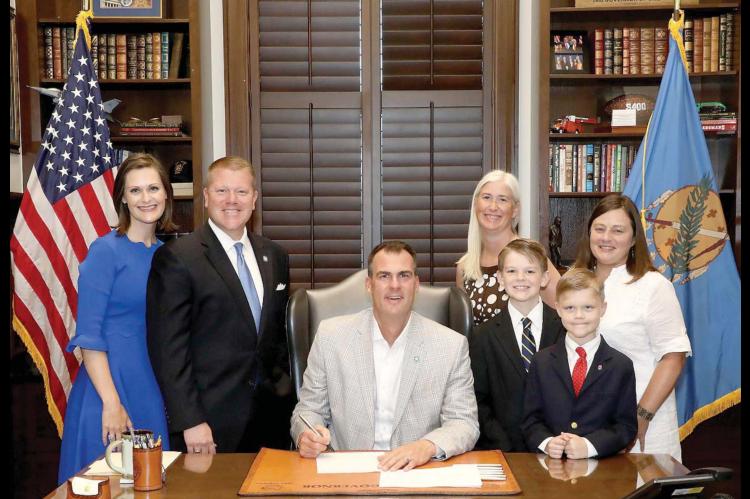
A ceremonial bill signing Monday of one of two bills sponsored by House Majority Leader Mike Sanders, R-Kingfisher, highlighted new tools available for state students and teachers.
House Bill 2804 requires dyslexia screening for kindergarten through thirdgrade students not reading on grade level beginning in the 2022-23 school year.
The bill builds upon House Bill 1228, passed last year, which provides professional development for teachers across Oklahoma to help them better recognize signs of dyslexia in their students.
“I’m incredibly grateful to have won passage of these two important pieces of legislation and to see them become part of the Oklahoma statutes,” Sanders said. “Children statewide will benefit from screening that will help them learn to read on grade level and achieve academic success.”
A second bill signed ceremonially on Monday was HB 2988, which permits victims of drunk drivers will now have an opportunity to speak to those who commit this crime.
Sanders said both pieces of legislation are items of significant importance to him during his legislative career.
“I have fought always on the side of victims of crime, to see that their voices are heard and their needs considered in matters of criminal sentencing,” Sanders said.
“At the same time, I’ve been a strong advocate for children diagnosed with dyslexia who too often got left behind their peers in reading and other academic subjects because their condition remained undetected or undiagnosed.”
Both bills were signed into law in May and took effect July 1. Ceremonial bill signings allow lawmakers and those influential in helping to draft the legislation or those most affected by it to attend. Sanders expressed appreciation to
Sanders expressed appreciation to State Sen. Stephanie Bice, R-Oklahoma City, and State Sen. Lonnie Paxton, R-Tuttle, the Senate authors of HB 2804 and HB 2877, respectively, for their work in getting the bills passed in the state Senate.
He also thanked members of the Dyslexia and Education Task Force, the Decoding Dyslexia Oklahoma and members of the victims’ impact panel programs for their help with drafting the two pieces of legislation.