
1 minute
So what the heck is a LANDSPOUT?
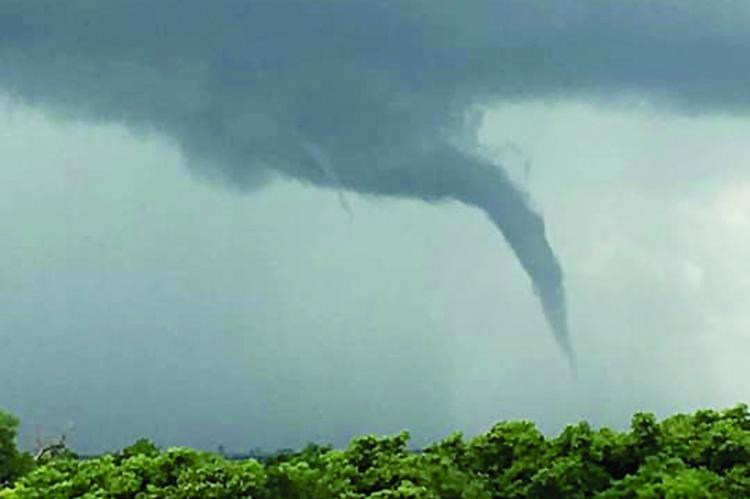
Without an official storm chaser or manic TV weather man in sight, photographs and videos of multiple ominous funnels appearing west of Kingfisher were blowing up so cial media Sunday afternoon.
So were they tornadoes?
Well, technically, yes, but not in the traditional Oklaho ma sense.
“They were landspouts,” Kingfisher City-County Emer gency Management Director Steve Loftis said Monday. “Not too common in Oklahoma. See them a lot in Colorado.”
According to the National Severe Storms Laboratory in Norman, most Oklahoma tornadoes are spawned by “supercells,” violent storm systems which contain a per sistent rotating updraft called a mesocyclone.
By contrast, a landspout is a type of nonsupercell tornado that consist of narrow, rope like condensation funnels that form while the thunderstorm cloud is still growing and there is no mesocyclone present.
The spinning action starts at ground level and is caused by wind shear from a warm or cold front or a dryline. Contact with an updraft is what causes it to be stretched upward into a tornado.
Landspouts are more common in Eastern Colorado where cool air rushing down from the Rocky Mountains collides with the hot, dry air of the Colorado plains.
Other kinds of nonsupercell tornadoes are waterspouts, which form exactly like land-spouts except over bodies of water, and so-called “gustnados,” which the NSSL describes as “a whirl of dust or debris at or near the ground with no condensation funnel, which forms along the gust front of the storm.”
While still technically classified as tornadoes, nonsupercell twisters tend to be small and usually form away from populated areas, causing little to no damage.