
Stricker pleads guilty to mutilating, burning, girlfriend’s body, but says he didn’t kill her
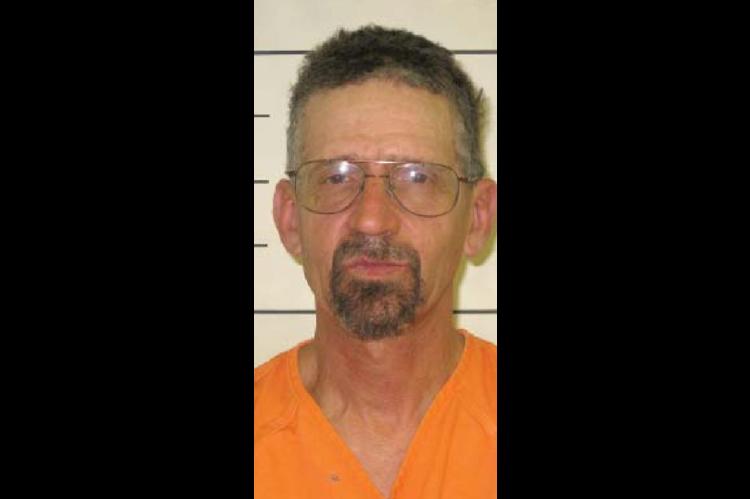
Steven Stricker not only admitted to authorities that he dismembered, burned and “pulverized” the remains of his grilfriend in April 2019, he also pleaded guilty to the crime in open court Tuesday.
But it’s still up to a Kingfisher County jury to decide whether Stricker, 64, is also guilty of killing Brenda Baber, 56, whom Stricker insists died in an accidental fall during an altercation at their Kingfisher residence.
Stricker’s trial began Tuesday after attorneys spent Monday selecting a jun’.
He is charged with first-degree (intentional) murder or, in the alternative, second-degree felony murder for a death unintentionally caused during the commission of domestic abuse.
Outside of the presence of the jury, Stricker appeared with his attorney Tuesday morning to plead guilty to a second felony offense of desecration of a human corpse.
In his opening statement, defense attorney Jarrod Stevenson of Oklahoma City told the jury they would hear from Stricker himself that “he did something really bad” to Baber’s body after she died, “but that doesn’t prove she was murdered.”
However, Assistant District Attorney Eric Epplin argued in his opening statement that Stricker not only intentionally killed Baber, but he was contemplating her murder at least two weeks before her death.
Epplin said Stricker was messaging “his internet girlfriend” through a gaming app on St. Patrick’s Day, 2019, when he mentioned he needed a favor involving “someone in my immediate family, and I don’t mean my dog.”
Epplin said in the same messaging conversation, Stricker wrote “Someone needs to go bye-bye” and “I just want her gone. If she leaves, she’ll take a lot. I just want what’s here.”
“Fifteen days later, Brenda Baber was dead,” Epplin said.
Epplin also told the jury that Baber called his sister after police visited his home looking for Baber on April 5, 2019, and told her that Baber was gone, that he used to be a butcher, that a fireplace “does wonders” and “if you ever need me to kill, I know how to do it and I know how to dispose of a body.”
Epplin said that Baber’s charred bone fragments were found “strewn about the property” where the couple lived at 421 W. Sheridan Ave. in Kingfisher, including some found days later lodged in the city’s sewer system.
Witnesses testifying Tuesday morning included Baber’s sister, Ellen “Sue” Samuels of Cushing, who arrived at the couple’s home about 11:30 a.m. April 5, 2019, with a U-Haul truck, ready to move Baber and her belongings to Cushing.
Samuels said she and Baber had been planning the move in a series of phone calls, the last one on April 1.
She told the jury she was already worried about her sister when she arrived at the house because Baber had not been answering calls or texts all day.
“I knocked on the door and then the window and and got no answer,” she said. “I kept hollering her name.”
Samuels said her concern was heightened when she heard Brenda’s dachshund “Coco” barking inside the door.
“That dog would not be there without Brenda.”
Samuels said she and other family members remained at the house about four hours, continuing to try to reach Baber on the phone and knocking on doors and windows at the house.
She went around the back of the house about 2:30 p.m. and was looking through a garage door window when she saw Stricker standing in a hallway inside.
Samuels said she continued to knock and asked “where’s Brenda?” but Stricker ignored her and left the hallway.
Samuels said when she went back to the front door of the house, she could see Stricker standing in the living room “holding my sister’s cell phone.”
Again, he did not respond to Samuels’ knocks or pleas, she said.
Samuels told the jury the next time she saw Stricker, he was in the backyard with the dog, smoking and drinking a beer.
This time when she asked about her sister, Stricker said Baber did not want to see or talk to Samuels.
“He said she had walked to a friend’s house and pointed south,” Samuels said.
When Samuels insisted Stricker get Baber on the phone, he ignored her, Samuels testified.
That’s when she called the Kingfisher Police Department.
Samuels also testified about Baber and Stricker’s tumultuous relationship of about nine years.
She said that she frequently heard Stricker in the background when she talked to Baber on the phone, telling her to put the call on speakerphone so thathe could hearboth sides.
She described his comments as “ugly - calling her names.”
Samuels testified that Baber hadleft Stricker before, moving into a Cushing apartment, but then returning to Kingfisher after a few weeks.
She said that in a December phone conversation, Baber had told her that Stricker was “trying to kill her.”
Samuels said she called the police April 5 because her sister had told her on more than one occasion that if she ever failed to answer the phone or the door, it would be because Stricker “had done something bad to her.”
Jurors also heard from Kingfisher Police Officer Jason East, one of the first to arrive on the scene, and watched about 45 minutes of footage from his body camera of police interaction with Stricker inside his home while they were trying to discover Baber’s whereabouts on April 5.
Stricker, who later admitted that he had already dismembered, burned and disposed of Baber’s remains days before the police visit, appeared relaxed in the video, either leaning casually against the wall, standing with his arms crossed or interracting with the dog as he responded to questions.
Jurors also heard from Stricker’s former neighbor, Donovan Mitchell, who testifed that he had observed Sticker using his backyard fire pit and “messing around in his garden” in the days prior to April 5.
Mitchell said the gardening activity seemed unusual to him because the home had been purchased by FEMA in the city’s flood buy-back program and was due to be demolished.
The trial is expected to continue through the end of the week. Watch for updates online and in Sunday’s digital edition.