
TRIAL BY FIRE
Local ADA commits months to successful arson , murder prosecution in 12-week trial
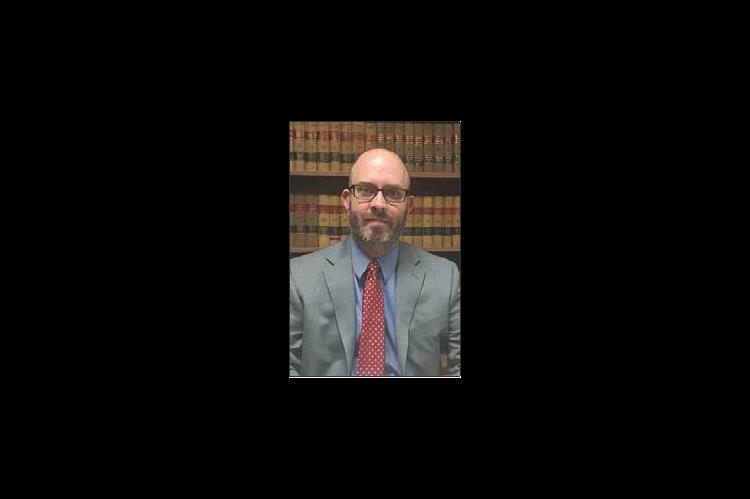
John Salmon was hired as the solo full-time prosecutor in Kingfisher County in July 2017.
But a Calumet double murder case commanded at least some of his attention since almost his first day in the Kingfisher office.
And it commanded all of his attention from December until a Canadian County jury convicted Derek Don Posey, 36, of two counts of first-degree murder and then sentenced him to death June 6.
Along with fellow prosecutors Erika Simpson and Austin Murrey, Salmon was part of a team assigned to Posey’s prosecution by District Attorney Michael Fields.
Fresh off a successful first-degree murder trial in this county, Salmon devoted three days a week to the case beginning last October, working from the Canadian County DA’s Office in El Reno.
Then in mid-December, preparing for the jury trial became his exclusive job, while prosecutors from other counties rotated through Kingfisher to cover the local caseload.
In addition to the three attorneys, the murder case also commanded the resources of a fulltime victim-witness coordinator and a fulltime Oklahoma State Bureau of Investigation case agent.
Such a marshaling of resources for a single state prosecution is unusual, but the Father’s Day 2013 murders of Amy Gibbins, 22, and her son Bryor, 5, were anything but usual, Salmon said.
The mother and son were first assumed to be the victims of an accidental electrical fire in their Calumet home where their bodies were found, until an alert bank employee spotted Posey on video using Gibbins’ debit card to drain her bank account at an ATM.
The transaction was recorded at the same time Gibbins’ home was burning to the ground, according to trial testimony.
Posey, a Tulsa oilfield worker, met Gibbins, an employee at an oilfield service company, at a local bar, Salmon said. He was arrested less than two weeks after the murder.
Unlike many investigations where physical or forensic evidence is hard to come by and officers hope for a confession or witness interviews to lead them to a suspect, the Calumet crime scene was awash in evidence.
Enough to spark a massive investigation involving state and federal forensic resources and personnel from across the country.
“We had DNA evidence, arson evidence, toolmarks, cell phone activity, videotape, medical evidence from the bodies, you name it,” Salmon said.
In addition to the OSBI and the state medical examiner and fire marshal’s offices, experts from the Federal Bureau of Investigation and the Bureau of Alcohol, Tobacco and Firearms all weighed into the investigation.
“We had a ton of expert witnesses who looked at this case, including a fire engineer who built three different replicas of the house and burned them to the ground to see how long it took for the roof to collapse and a forensic anthropologist who identified the injuries sustained by the mother before her death and the cause of death of both victims,” Salmon said.
All of that independent analysis and the reports that resulted eventually coalesced into 72 state witnesses, 600 exhibits and 12 weeks from jury selection to the date the death penalty verdict was announced – one of Oklahoma’s longest state criminal trials ever, Salmon said.
The fact that the state was seeking the death penalty added to the learning curve for Salmon, his fellow prosecutors and even the eventual presiding judge, none of whom had handled a death penalty case, he said.
Seeking the death penalty not only requires a separate phase of trial once a conviction is obtained, it also complicates jury selection.
Prospective jurors must first be interviewed to determine whether they will be willing to impose the death penalty if the evidence warrants.
In the Calumet case, that involved starting with a pool of more than 500 prospective jurors and interviewing them in small groups until a total of 150 were found who said they could sentence someone to death under the right circumstances.
Then that group of 150 was subjected to the traditional jury selection process until the jury of six men and six women was eventually seated.
The lengthy first phase of the trial, which involved hundreds of images and documents projected onto a 75-inch monitor as expert after expert testified, ended in a guilty verdict after just a few hours of jury deliberation on May 17.
Another 20 or 30 prosecution witnesses and 30 defense witnesses testified in the penalty phase before the jury returned with its death penalty verdict June 6.
“On D-Day, actually” Salmon said.
Posey’s sentence will be formalized July 22 and then subject to an automatic appeal process handled by the state attorney general’s office.
Salmon’s role in the case is over and he is back to full-time duties in the Kingfisher office.
But he said the case in which he was totally immersed for all those months is not one he’ll easily put behind him.
“On behalf of the victims’ family and the state, I’m grateful to the jury for their service I’m also grateful to the other ADAs who handled local cases to free up my time,” he said. “This is a case that will always stay with me.”