
Bollenbach says board vote follows state statute
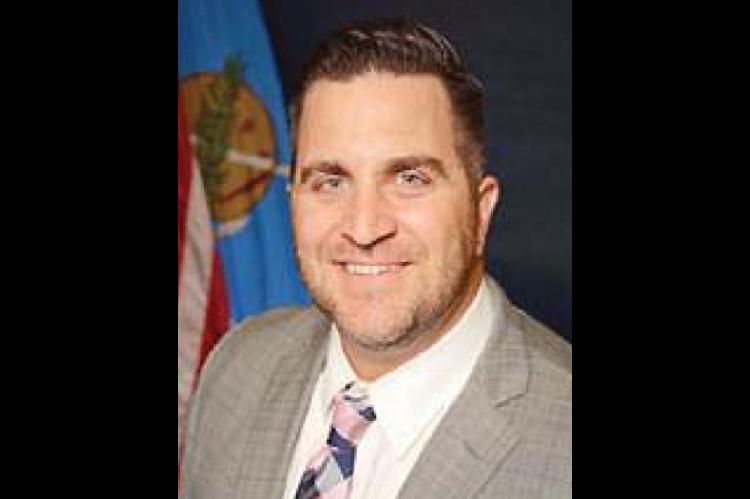
State Board of Education member Kurt Bollenbach said the board’s decision to reject two schools’ applications to participate in a scholarship program for special needs children was based on state statute, not an anti-Christian bias.
In a telephone call Friday afternoon with the Times and Free Press, Bollenbach said the state board of education is required to follow state statute, including a provision in Title 70 which outlines requirements for schools seeking to participate in the Lindsey Nicole Henry Scholarship Program.
(The scholarship provides funds to parents of special needs children to cover tuition in a private school which better meets those disability needs. Schools desiring to accept such scholarships must first be approved by the state board of education.)
“One of those requirements (outlined in Title 70) are that you must comply with the anti-discrimination provisions of the U.S. Code,” Bollenbach said. “That code says you can’t discriminate based on race, color or national origin and then that was expanded by Executive Order in 2000 to also include gender, religion, disability and sexual orientation.
“Those schools that applied did not include all of those categories in their anti-discrimination policies.”
Bollenbach said he began researching state and federal anti-discrimination law when he read one of the school’s applications and noticed that its anti-discrimination policy did not include disability as a protected class.
“The general premise of the scholarship is tied to students who have special needs and who could be better served in a private school,” he said, adding that a provision stating that a school does not discriminate based on disability would seem essential to the scholarship’s purpose.
He also noted that his objections have nothing to do with a school’s religious affiliation.
“If there is a school for Muslim boys or a secular school that have excellent autism programs but the Muslim school does not accept girls and the secular school does not accept Christians then I would have the same issue,” he said.
“We just want to do our best to make sure schools are meeting these statutory requirements.
“Private schools are free to set whatever anti-discrimination policies they choose – unless they are accepting public dollars.”
Bollenbach also noted that any challenge of the anti-discrimination requirements as being overreaching needs to be directed at the state legislature, not the board of education.
“Our decisions have to adhere to state law and if that law is wrong or unconstitutional, that needs to be addressed by the Legislature,” he said.