
Yes, socialism has been tried around the world and each experiment failed miserably
[Continued From Page 5 of the Wednesday Edition.
[ Ed. Note : A column by Lee Edwards, distinguished fellow in conervative thought at The Heritage Foundation’s B. Kenneth Simon Center for Principles and Politics and a leading historian of American conservatism, told of the experience of three nations with socialism. The column, which had to be cut short Wednesday due to space limitation, debunks the notion that “real socialism has never been tried, relating the experience of Israel, India and the United Kingdom. For greater context you can see the earlier portion of the column on pages 4 and 5 of the Wednesday edition. The rest of the story continues with the experience of Great Britain.]
From 1950 to 1975, the U.K.’s investment and productivity record was the worst of any major industrial country. Trade union demands increased the size of the public sector and public expenditures to 59% of GDP. Wage and benefits demands by organized labor led to continual strikes that paralyzed transportation and production.
In 1978, Labour Prime Minister James Callaghan decided that, rather than hold an election, he would “soldier on” to the following spring. It was a fatal mistake. His government encountered the legendary “winter of discontent” in the first months of 1979. Public-sector workers went on strike for weeks. Mountains of uncollected rubbish piled high in cities. Bodies remained unburied and rats ran in the streets.
Newly elected Conservative Prime Minister Margaret Thatcher, the United Kingdom’s first female PM, took on what she considered her main opponent—the unions.
Flying pickets, the ground troops of industrial conflict who would travel to support workers on strike at another site, were banned and could no longer blockade factories or ports. Strike ballots were made compulsory. The closed shop, which forced workers to join a union to get a job, was outlawed. Union membership plummeted from a peak of 12 million in the late 1970s to half that by the late 1980s.
“It’s now or never for [our] economic policies,” Thatcher declared, “let’s stick to our guns.”
The top rate of personal income tax was cut in half, to 45%, and exchange controls were abolished.
Privatization was a core Thatcher reform. Not only was it fundamental to the improvement of the economy, it was “one of the central means of reversing the corrosive and corrupting effects of socialism,” she wrote in her memoirs.
Through privatization that leads to the widest possible ownership by members of the public, “the state’s power is reduced and the power of the people enhanced.” Privatization “is at the center of any programme of reclaiming territory for freedom.”
She was as good as her word, selling off government-owned airlines, airports, utilities, and phone, steel, and oil companies.
In the 1980s, Britain’s economy grew faster than that of any other European economy except Spain. U.K. business investment grew faster than in any other country except Japan. Productivity grew faster than in any other industrial economy.
Some 3.3 million new jobs were created between March 1983 and March 1990. Inflation fell from a high of 27% in 1975 to 2.5% in 1986. From 1981 to 1989, under a Conservative government, real GDP growth averaged 3.2%.
By the time Thatcher left government, the state-owned sector of industry had been reduced by some 60%. As she recounted in her memoirs, about 1 in 4 Britons owned shares in the market. Over 600,000 jobs had passed from the public to the private sector. The U.K. had “set a worldwide trend in privatization in countries as different as Czechoslovakia and New Zealand.”
Turning decisively away from Keynesian management, the once sick man of Europe now bloomed with robust economic health. No succeeding British government, Labour or Conservative, has tried to renationalize what Margaret Thatcher denationalized.
The Lesson of China
How then to explain the impressive economic success of a fourth major economy, China, with annual GDP growth of 8 to 10% from the 1980s almost to the present?
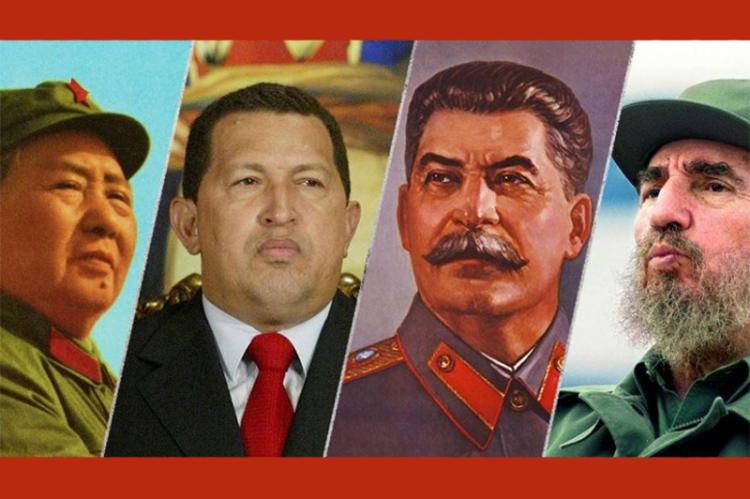
From 1949 to 1976, under Mao Zedong, China was an economic basket case, owing to Mao’s personal mismanagement of the economy. In his avid pursuit of Soviet-style socialism, Mao brought about the Great Leap Forward of 1958-60, which resulted in the deaths of at least 30 million and perhaps as many as 50 million Chinese, and the Cultural Revolution of 1966-76, in which an additional 3 million to 5 million died. Mao left China backward and deeply divided.
Mao’s successor, Deng Xiaoping, turned China in a different direction, seeking to create a mixed economy in which capitalism and socialism would coexist with the Communist Party monitoring and constantly adjusting the proper mix. For the past four decades, China has been the economic marvel of the world for the following reasons:
It began its economic ascent almost from ground zero because of Mao’s ideological stubbornness. It has engaged in the calculated theft of intellectual property, especially from the U.S., for decades. It has taken full advantage of globalism and its membership in the World Trade Organization, while ignoring the prescribed rules against such practices as intellectual property theft. It has used tariffs and other protectionist measures to gain trade advantages with the U.S. and other competitors.
It created a middle class of some 300 million people, who enjoy a decent living and at the same time constitute a sizable domestic market for goods and services. It continues to use the forced labor of the laogai to make cheap consumer goods that are sold in Walmart and other western stores. It allows an enormous black market to exist because party members profit from its sales.
It permits foreign investors to buy into Chinese companies, but the government—i.e., the Communist Party—always retains a majority interest. It operates an estimated 150,000 state-owned enterprises that guarantee jobs for tens of millions of Chinese. It depends on the energy and experience of the most entrepreneurial people in the world, second only to Americans.
In short, the People’s Republic of China was an economic failure for its first three decades under Mao and Soviet socialism. It began its climb to become the second-largest economy in the world when it abandoned socialism in the late 70s and initiated its experiment, which so far has been successful, in capitalism with Chinese characteristics.
There are clear signs that such success is no longer automatic. China is experiencing a slowing economy, is ruled by a dictatorial but divided Communist Party clinging to power, faces widespread public demands for the guarantee of fundamental human rights, and suffers from a seriously degraded environment.
History suggests that these problems can best be solved by a democratic government ruled by the people, not a one-party authoritarian state that resorts to violence in a crisis, as Beijing did at Tiananmen Square and is doing in Hong Kong.
Socialism’s Fatal Conceit
As we have seen from our examination of Israel, India, and the United Kingdom, the economic system that works best for the greatest number is not socialism with its central controls, utopian promises, and OPM (other people’s money), but the free-market system with its emphasis on competition and entrepreneurship. All three countries tried socialism for decades, and all three finally rejected it for the simplest of reasons — it doesn’t work.
Socialism is guilty of a fatal conceit: It believes its system can make better decisions for the people than they can for themselves. It is the end product of a 19th-century prophet whose prophecies (such as the inevitable disappearance of the middle class) have been proven wrong time and again.
According to the World Bank, more than 1 billion people have lifted themselves out of poverty in the past 25 years, “one of the greatest human achievements of our time.” Of those billion, approximately 731 million are Chinese, and 168 million Indians.
The main driver of this uplift from poverty has been the globalization of the international trading system. China owes most of its success to the trade freedom offered by the U.S. and the rest of the world.
The latest edition of Index of Economic Freedom from The Heritage Foundation confirms the global trend toward economic freedom: Economies rated “free” or “mostly free” enjoy incomes that are more than five times higher than the incomes of “repressed economies” such as those of North Korea, Venezuela, and Cuba.
Israel’s socialist miracle turned out to be a mirage, India discarded socialist ideology and chose a more market-oriented path, and the United Kingdom set an example for the rest of the world with its emphasis on privatization and deregulation.
Whether we are talking about the actions of an agricultural country of 1.3 billion, or the nation that sparked the industrial revolution, or a small Middle Eastern country populated by some of the smartest people in the world, capitalism tops socialism every time.