
‘Compassion’ is key with free health clinic
Cameron discusses changes, obstacles, joy of serving at recent Lions Club meeting
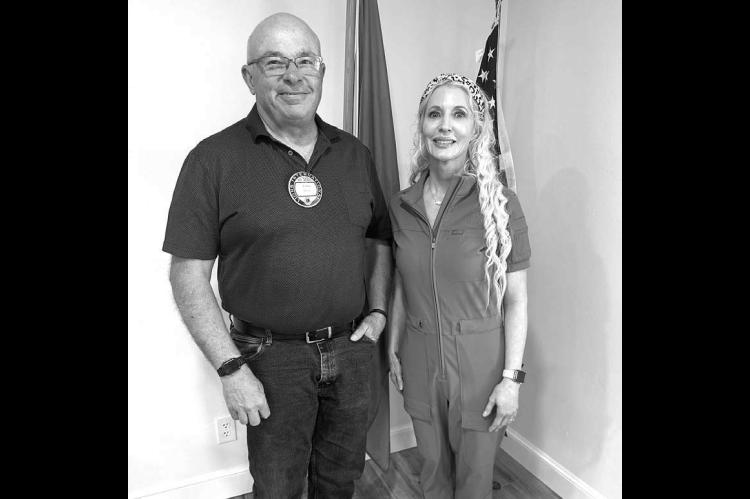
It’s called Compassion Clinic for a reason.
The job calls for it. Rachel Cameron talked about the monthly outreach at a recent Kingfisher Lions Club meeting.
One of the medical professionals who has been with the clinic from the start, Cameron talked about its evolution, obstacles and why she calls it a “blessing” to be a part of it.
The Compassion Clinic offers a free health clinic to the uninsured and underinsured at Kingfisher First Baptist Church on the second Monday of every month.
It started in January 2012 at just about the same time “Obamacare” was put into place, requiring everyone to have health insurance.
“Wethoughtwewouldn’t have any patients, so…that turned out to not be the case,” Cameron said.
With no restrictions in place and no appointments required, Cameron said people would begin lining up at noon waiting for doors that wouldn’t open until about 6 p.m.
Also in the early days, the clinic paid for prescriptions through local pharmacies. As the clinic clientele grew, so did the price tag.
“It got to be very, very, very expensive,” she said. “So we decided we needed a pharmacy.”
Heritage Pharmacy’s Vanessa England established and ran the pharmacy for more than two years, but family obligations pulled her away.
“We had a hard time finding another one,” said Cameron.
Zac Bracht of City Pharmacy in Watonga eventually filled that role and has done so ever since.
“He brings his wife and kids and they work every month,” Cameron said. “It’s a full pharmacy registered with the state. They’re subject to all the rules and regulations of every other pharmacy.”
If there are medications not on hand, all the local pharmacies provide them “at the best price possible,” she added.
Another major hurdle for the clinic - as for much of the world - was COVID-19.
Prior to the pandemic, there were five to seven providers working every single month along with the dozens of other volunteers, including several nurses.
They were seeing 120 to 130 people a month.
“Things were going great,” Cameron said.
Once COVID-19 hit, a lot changed.
The clinic tried several different methods to best serve a clientele that was mostly Hispanic.
But even after the world began to normalize, it became apparent the pandemic took its toll on the healthcare workers.
“Post COVID, it’s just been Bridget (Keast) and I,” said Cameron about the number of providers serving patients each month. “I think that everyone is probably overworked and burnt out like most healthcare providers.”
The number of nurses has also dipped considerably.
“So that’s something we desperately need,” she said. “We desperately need nurses.”
The smaller amount of providers means the clinic can’t see as many people each month.
“Bridget and I can’t see 100 people after work. We’d never leave,” Cameron said.
She said they’re usually seeing patients until 10:30 or 11 p.m. and often times have been there until 2 a.m.
That’s after working a full shift. Cameron is a family nurse practitioner who owns Trail Creek Wellness.
Those in the pharmacy are there for another hour after that filling prescriptions and closing up.
So now, patients are asked to call and schedule a time and there are other restrictions that have been put in place as the two providers can only see about 40 people each week.
“We’ve limited it now, which is something I never wanted to do,” said Cameron, who was named the Kingfisher Chamber of Commerce Volunteer of the Year for 2022.
One thing has not changed over the dozen- plus years of service.
“Our goal, our purpose is just to be the hands and feet of Jesus,” Cameron said. “Medical care is not why we do it. It’s just a reason to bring them there.”
Volunteers are generally on hand not just to assist, but also to witness, or sometimes just talk. “There are a lot of people who volunteer from First Baptist Church, but there are also a lot of people from other churches,” she said.
Some bring food. Some bring supplies. Some just bringing a caring ear.
“If you love to talk and you love to share about Jesus, there’s plenty of time while those people are sitting and waiting to see us or to see the pharmacy staff,” Cameron said. “You can talk to them. You can sing to them. Just to get to know them and show that you care.
“It’s not just about handing them a Bible…it’s about that relationship and acceptance.”
In other words, she said, it’s about compassion.
“We want to let them know it’s ok that if they walk into your church, they’re going to be greeted just the same as anyone else,” she said. “Even if they don’t speak much English or if they don’t dress the way you dress….that’s really what they need is that unconditional love.
“That’s why we do it really.”
Cameron said she’s reminded of that each month.
“There’s a lot of new immigrants, new families, but a lot of them work harder than we do. They work two to three jobs each of them and they’re just happy to be in a place they can walk outside and feel safe,” Cameron said.
“I know there’s a lot of politics. And I think it’s easy to have an opinion when those people aren’t in front of you, when you’re not face to face with another human that…I mean they’re just as important in God’s eyes as we are.
“Whatever else is going on, I think we have to remember that and it’s a blessing to get to do it. It’s a privilege. I’m really thankful.”